Recently I discovered a bounty of wild grapes growing near my home in Katy, TX. These are Mustang Grapes (Vitis mustangensis), which are too acidic to eat fresh, so I decided to turn them into homemade grape jam. I previously wrote about making jam from seeded grapes, but here I offer a more detailed, step-by-step account with additional photos of the process.
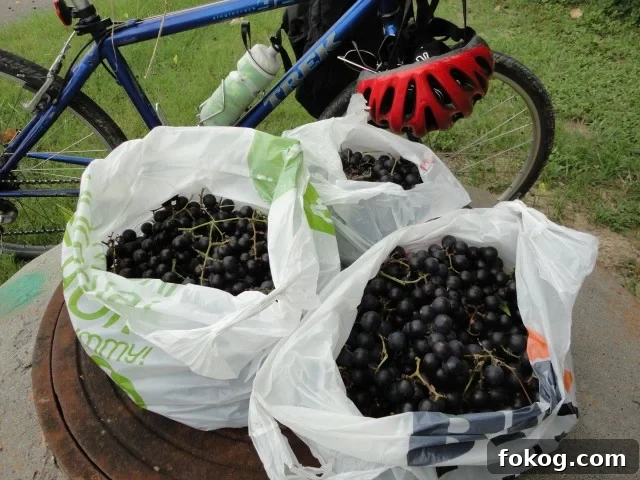
Picked Wild Mustang Grapes in Plastic Bags
Whether your grapes come from your yard or are foraged, the first steps are inspection, washing, soaking, and then a final inspection as you remove the grapes from the stems. I emphasize thorough cleaning to remove dirt, insects, and any damaged fruit.
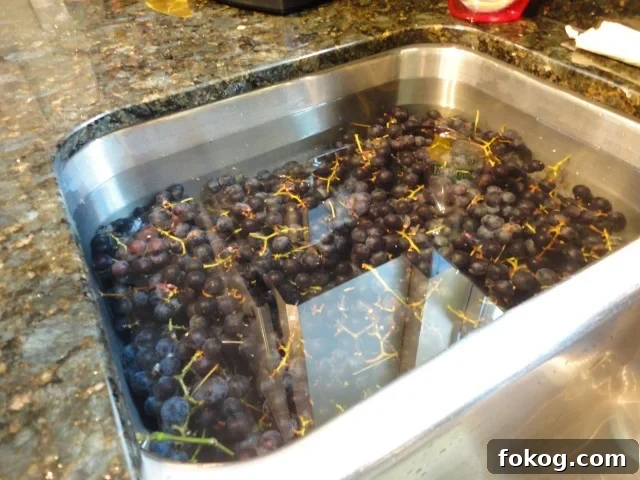
Wild Mustang Grapes Soaking in Water
I triple-washed and soaked the grapes to be sure any external debris was removed. During washing I discarded any grapes that were shriveled or damaged. This extra care ensures a cleaner final product and reduces the chance of off flavors.
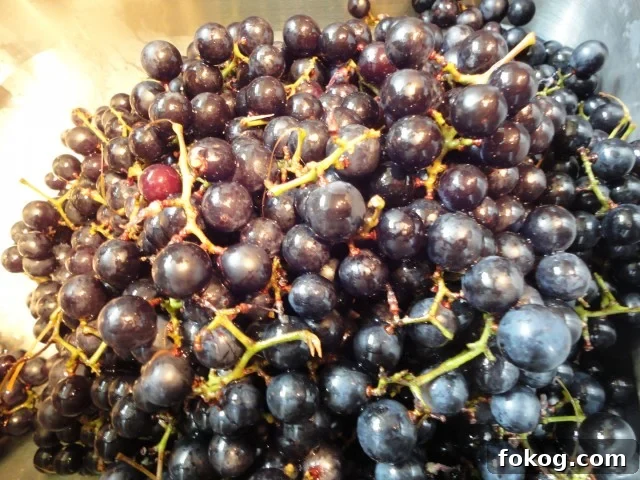
Triple Washed Wild Mustang Grapes
After cleaning, I removed the grapes from their stems and inspected them again. By the end of this step I had nearly filled two colanders with plucked grapes, ready for cooking.
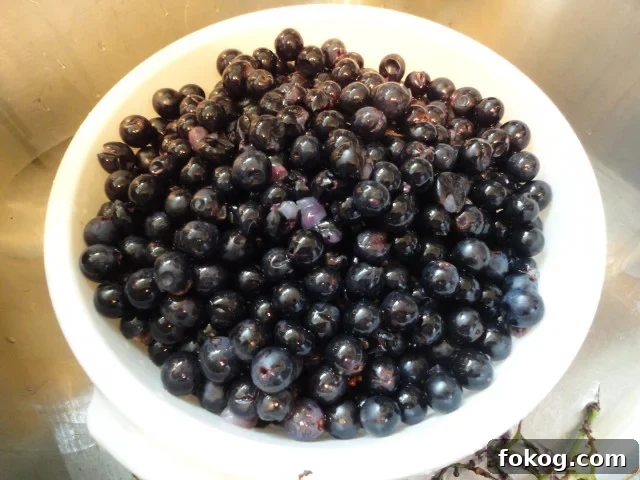
Wild Mustang Grapes Triple Washed, Plucked and in a Colander
I washed them once more, then transferred the grapes to a large pot with two cups of water. The extra water helps prevent the fruit from sticking and encourages even heating as the grapes break down.
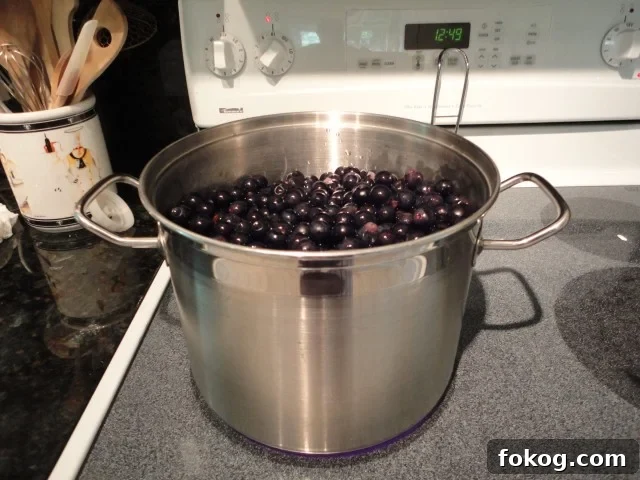
Mustang Grapes in a Pot to be Boiled
Set the stove to medium-high and bring the grapes to a boil, stirring occasionally. Cook until the grapes have burst and the mixture becomes a stew of juice, pulp, skins, and seeds. A reliable sign that the grapes are done cooking is when no whole grapes remain and the pot contains only broken-down fruit.
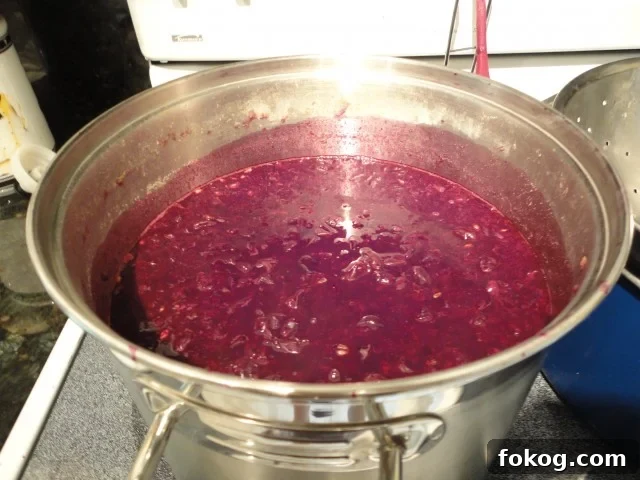
Mustang Grapes Boiled Down
Once the grape stew had cooled slightly, I poured the mixture through a colander to separate the juice and pulp from the skins and seeds. After most of the juice had drained, I pressed down on the solids to extract as much remaining liquid as possible. This yields the bulk of the juice and pulp needed for jam-making.
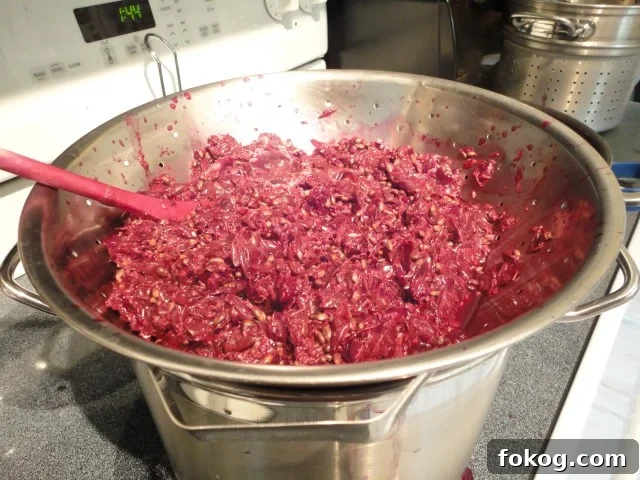
Mustang Grapes Boiled and with the Juice Being Separated through a Colander
From the batch I produced about 15 cups of grape juice and pulp. I tasted the juice to check acidity; sometimes wild grapes need a small amount of baking soda (sodium bicarbonate) to neutralize excess tartness. In this case the cooked juice was much less tart than the fresh grapes and did not require adjustment.
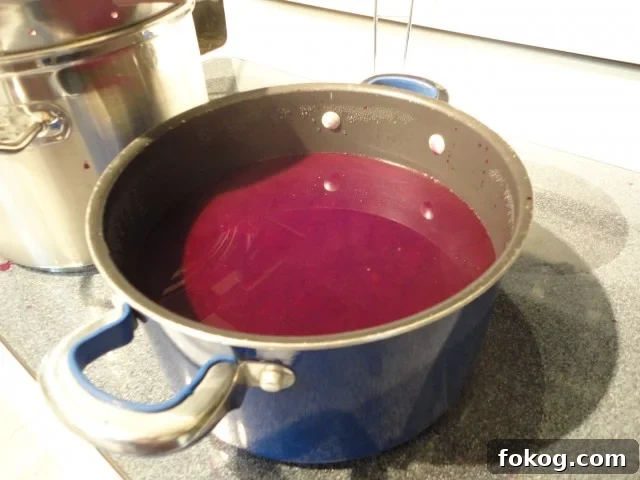
15 Cups of Juice and Pulp of Mustang Grapes in a Pot
Following the pectin package directions, I combined 5 cups of grape juice with one box of pectin and brought that mixture to a boil. I then added 7 cups of sugar, stirring thoroughly, and maintained a roiling boil for one full minute to activate the pectin and set the jam. After the one-minute boil the jam was removed from the heat and I prepared my sterilized jars for filling.
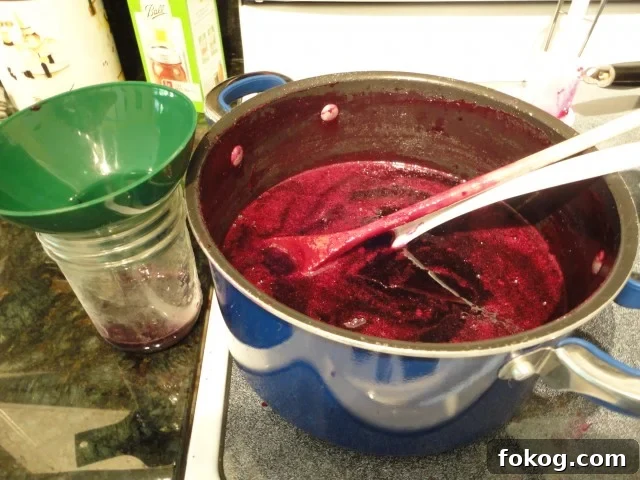
Mustang Grape Jam Being Boiled
There is plenty of guidance available on canning jams, jellies, and preserves, but I always follow the pectin box instructions and consult reliable preserving references when needed. Proper sterilization and processing are key to safe, shelf-stable jars.
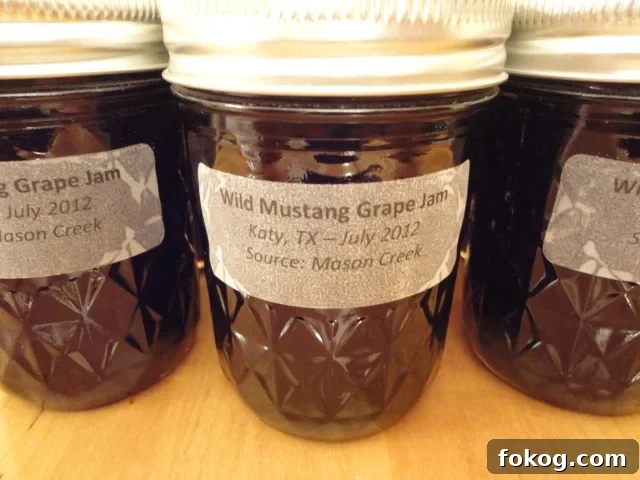
Wild Mustang Grape Jam in Jars
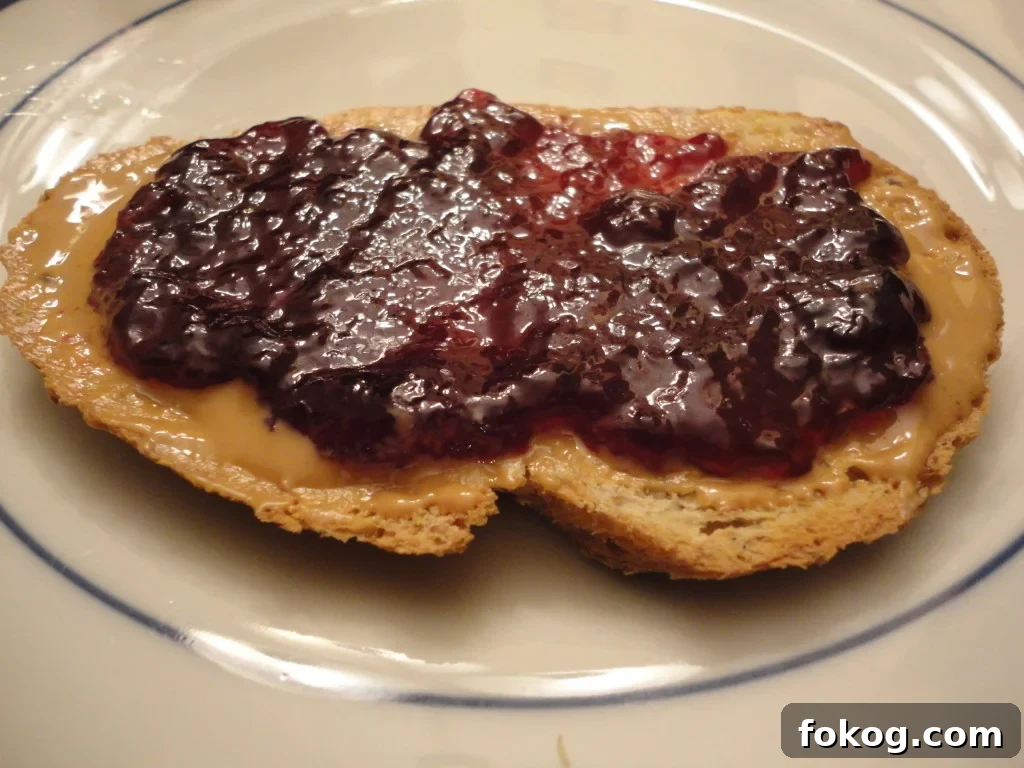
For tasting, I couldn’t resist sampling straight from the spoon and ladle, but my first official test was jam on toast with peanut butter. The flavor is intense, reminiscent of Concord grapes, and the texture is smooth. The jam’s color is striking—a deep purple that borders on black—making it both visually appealing and delicious.
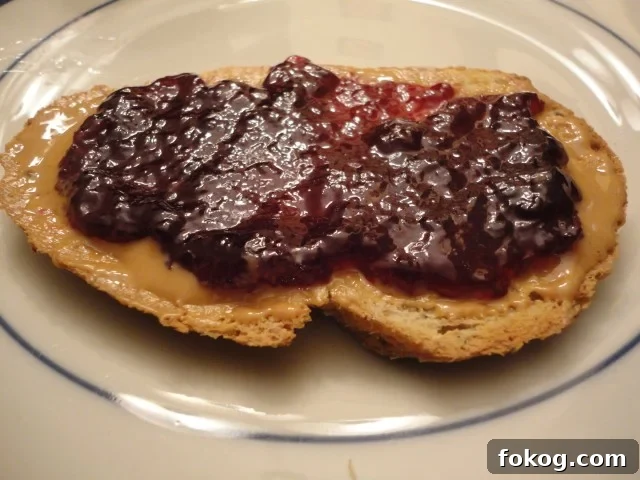
Homemade Mustang Grape Jam with Peanut Butter & Toast
Making jam from wild Mustang grapes takes a little effort, but the results are well worth it: flavorful, richly colored jam that preserves the unique character of these local grapes and makes excellent spreads, gifts, or pantry staples.