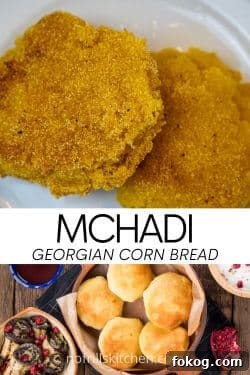
If you’re enjoying lobio in Georgia, you’ll often find mchadi served alongside it — a simple cornbread roll that pairs perfectly with the classic stewed bean dish. This mchadi recipe recreates that traditional accompaniment at home using ingredients you can usually find in supermarkets worldwide.
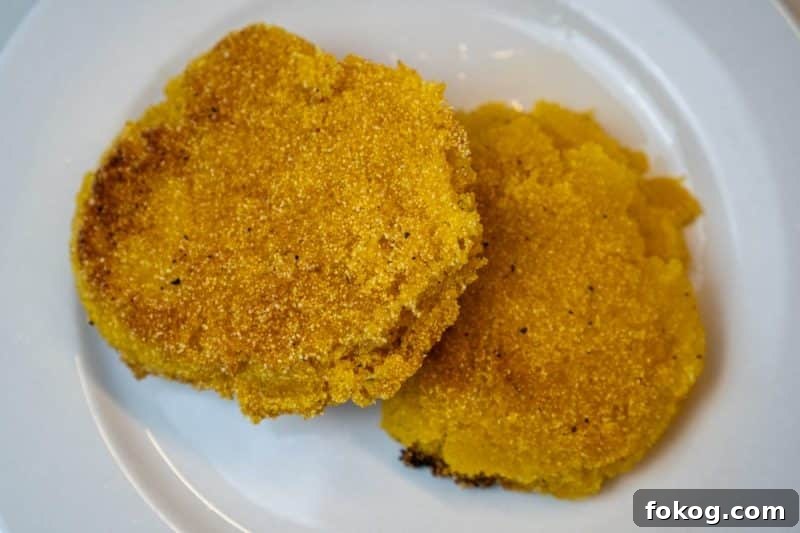
At its heart, mchadi is a straightforward, savory cornbread made from coarse cornmeal and water, then pan-fried. In Georgia it’s most commonly served with lobio and sometimes topped with fresh cheese. A related version, chvishtari, is often stuffed with cheese, while this recipe aims to stay closer to the basic form, with a small addition of seasoning and olive oil to enhance flavor and texture.
How to Make Georgian Mchadi
This recipe is simple but requires attention to texture because different cornmeal types hydrate differently. Add water slowly and judge the mix by feel rather than relying strictly on measurements.
Begin with coarse cornmeal. Traditional Georgian mchadi uses stone-ground white cornmeal. If you’re in the U.S., stone-ground grits (not instant or quick-cooking) are an appropriate substitute; elsewhere, coarse polenta works well. White cornmeal produces a more authentic look, but yellow polenta is widely available and gives a pleasant golden color.
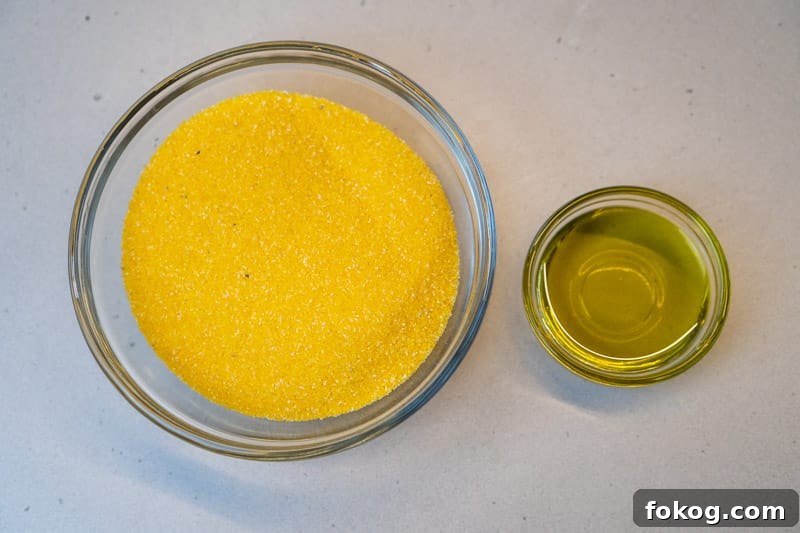
Place the cornmeal in a bowl and season generously with salt and freshly ground black pepper. While seasoning isn’t always traditional in Georgia, it improves the final flavor.
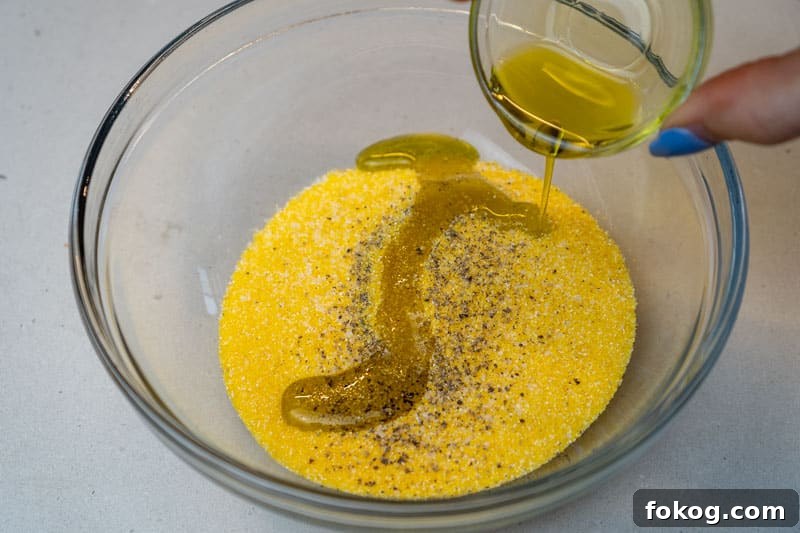
For a moister texture and extra flavor, add a little extra virgin olive oil to the cornmeal. If you can source a flavorful regional oil (for example Kakhetian olive oil), use that for a more authentic profile.
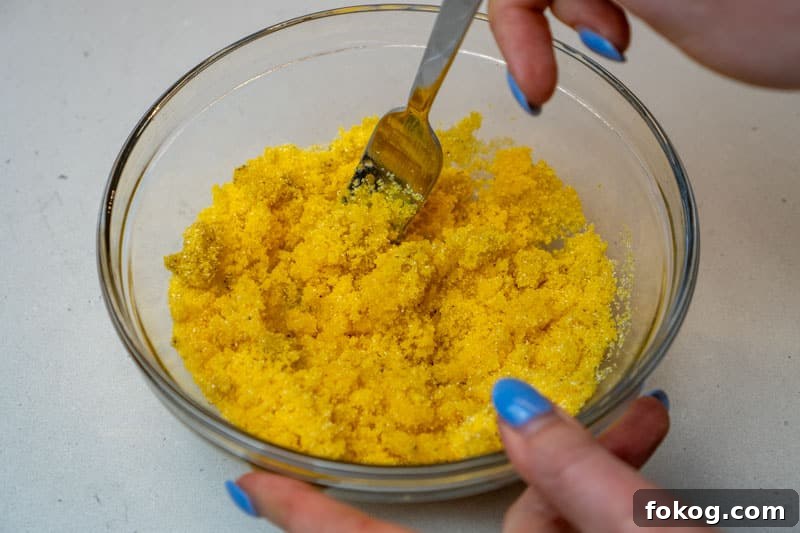
Slowly stream in cool water while mixing with a fork. Hydration varies by cornmeal type, so pour gradually. Stop when the mixture resembles wet sand and compacts well when pressed in your hand without crumbling. If needed, add slightly more than the recommended amount until you reach this texture.
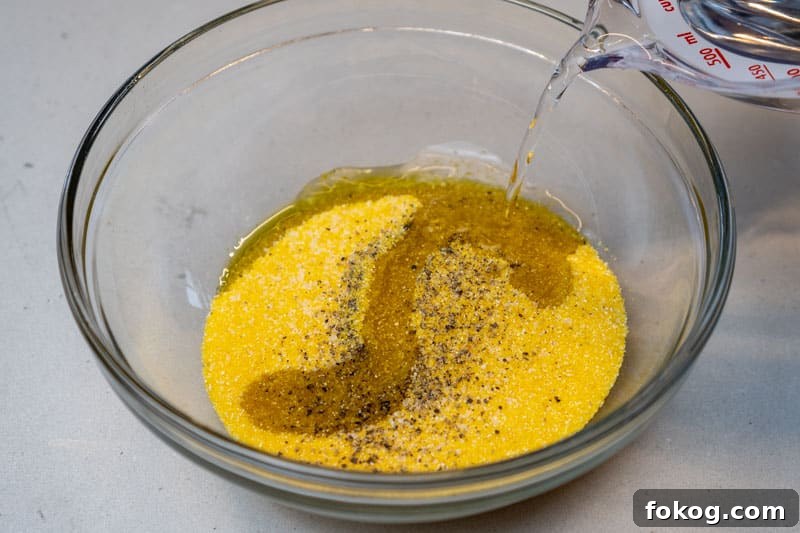
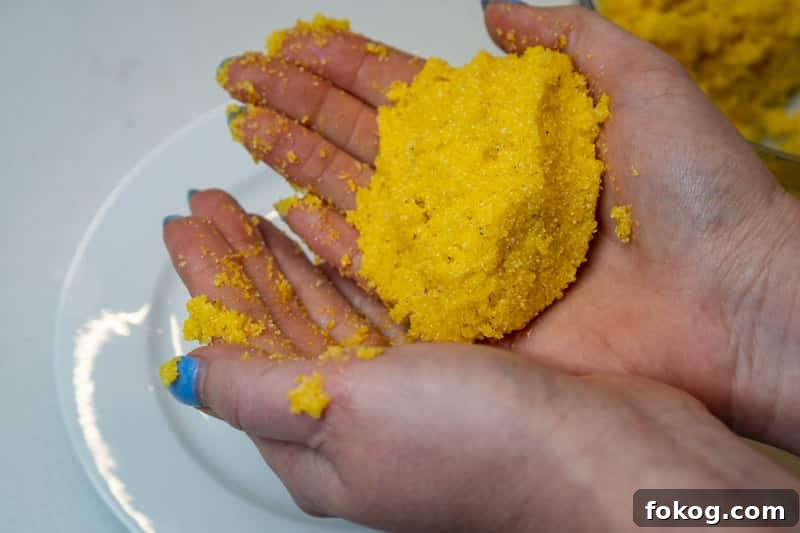
Once the dough holds together, form it into small patties about the size of your palm, packing them firmly in your hands so they don’t fall apart when frying.
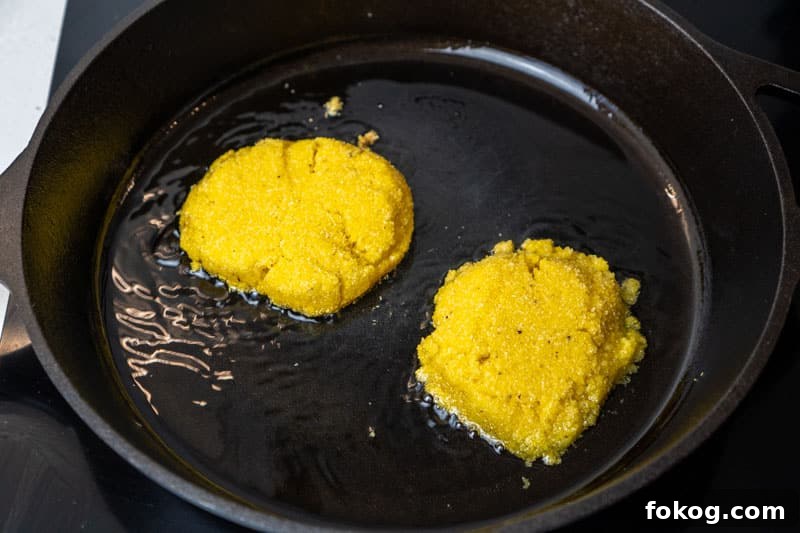
Heat a large skillet (cast iron works well) over medium-high and add enough neutral oil to coat the bottom. When the oil shimmers, gently place the mchadi patties in the pan. They’re delicate at first but forgiving — if a piece breaks, press it back together with a spatula.
Cook the mchadi for about five minutes on the first side until golden, then flip and cook for another five minutes. They should be crisp and golden outside, tender inside.
Serve mchadi immediately alongside Georgian dishes such as lobio, chakhokhbili, chashushuli, or ojakhuri. They also work well with fresh cheese or plain yogurt.
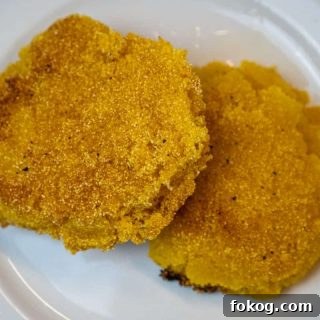
Mchadi: Georgian Cornbread
Ingredients
- 200 g (about 1 1/4 cups) coarse cornmeal (stone-ground or coarse polenta)
- 2 tsp extra virgin olive oil
- Salt and freshly ground black pepper, to taste
- Up to 120 ml (1/2 cup) cool water, plus more if needed
- Neutral oil for frying (vegetable or sunflower)
Instructions
- Add cornmeal to a large bowl, pour over the olive oil and season generously with salt and pepper. Mix to combine with a fork.
- Slowly pour in up to 120 ml (1/2 cup) cool water, mixing with a fork. Stop when the mixture has the texture of wet sand and holds together when squeezed; add a little more water if necessary.
- Heat a few tablespoons of neutral oil in a large skillet over medium-high. Divide the cornmeal mixture into four portions. Pack each portion into a palm-sized patty and transfer to the hot pan.
- Cook each mchadi for about 5 minutes per side, or until golden and crisp. Serve immediately.
Notes
Traditionally made with stone-ground white cornmeal, mchadi can also be prepared with coarse yellow polenta if white cornmeal is unavailable. Avoid instant varieties; use coarse or stone-ground products for the best texture.
Nutrition
Calories: 210 kcal | Carbohydrates: 36 g | Protein: 5 g | Fat: 5 g | Fiber: 5 g
Disclaimer: Nutritional information is automatically generated and provided as guidance only. Accuracy is not guaranteed.
Making traditional Georgian cornbread at home is quick and rewarding. These mchadi are an ideal partner for lobio and many other Georgian dishes.
Have questions or tried the recipe? Leave a comment or rating below.