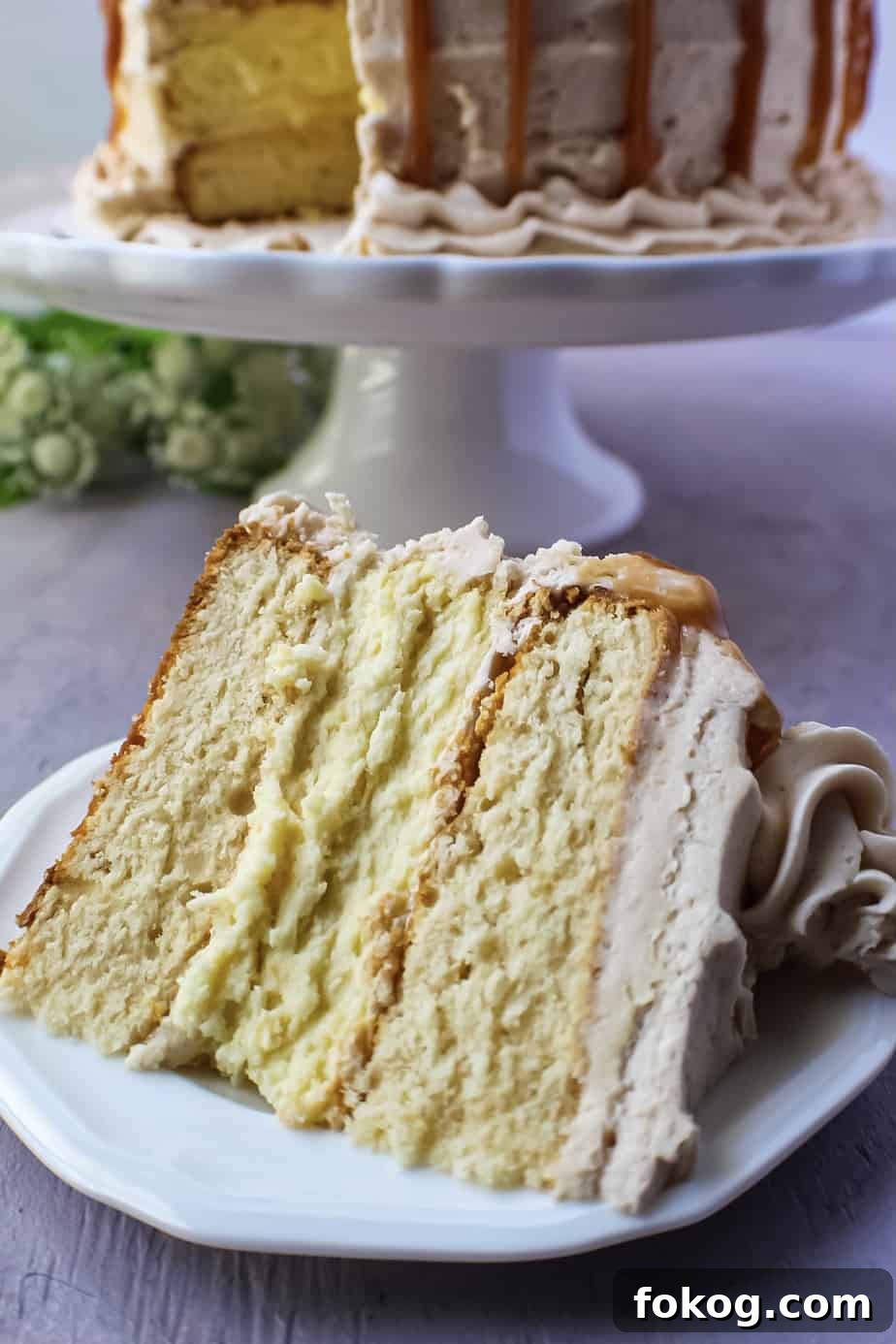
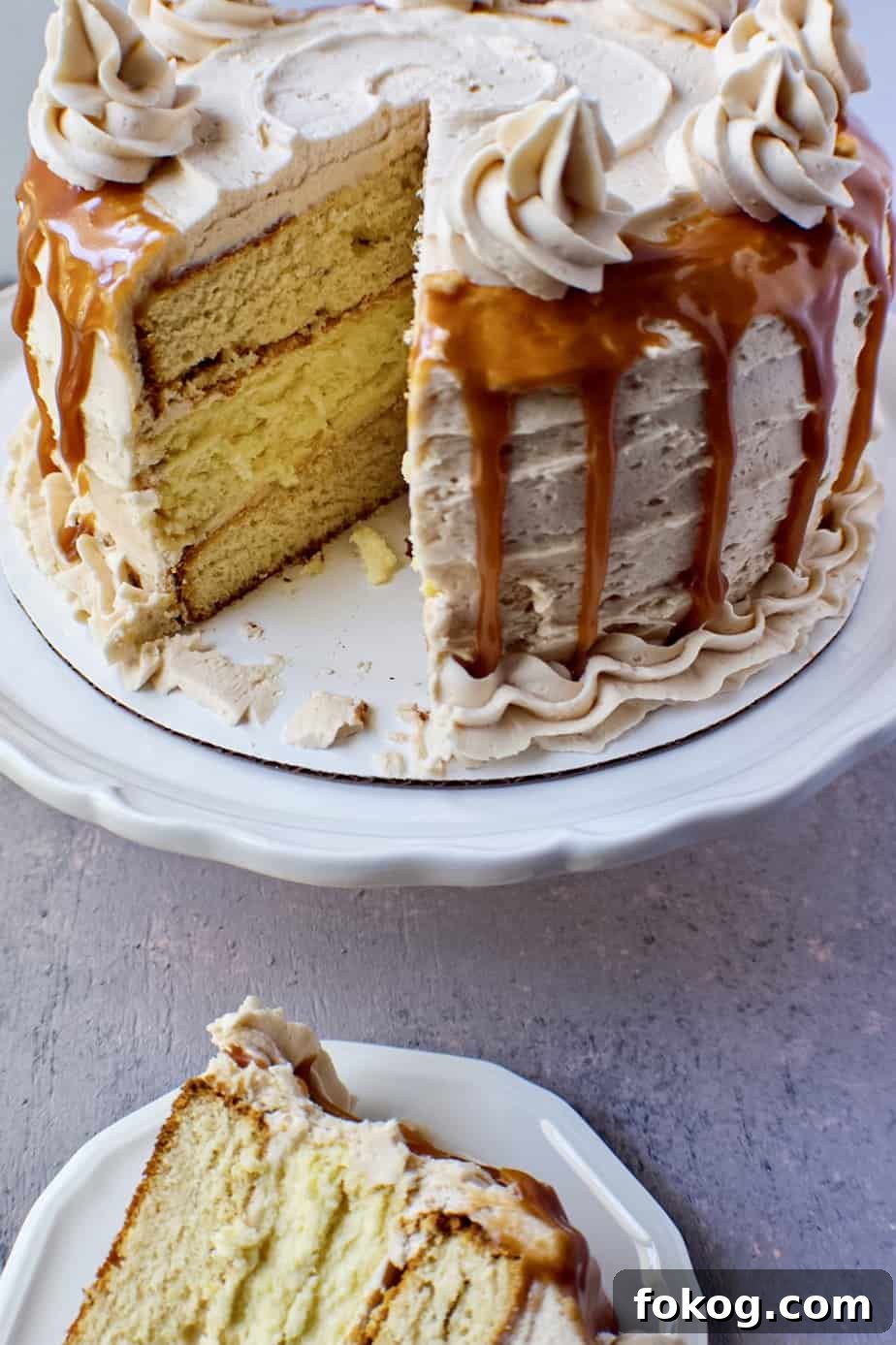
This fluffy caramel cake features a silky vanilla cheesecake layer in the middle, salted caramel folded into the cake and frosting, and a glossy caramel drip finish. Rich, creamy, and balanced with a hint of salt—it’s irresistible.
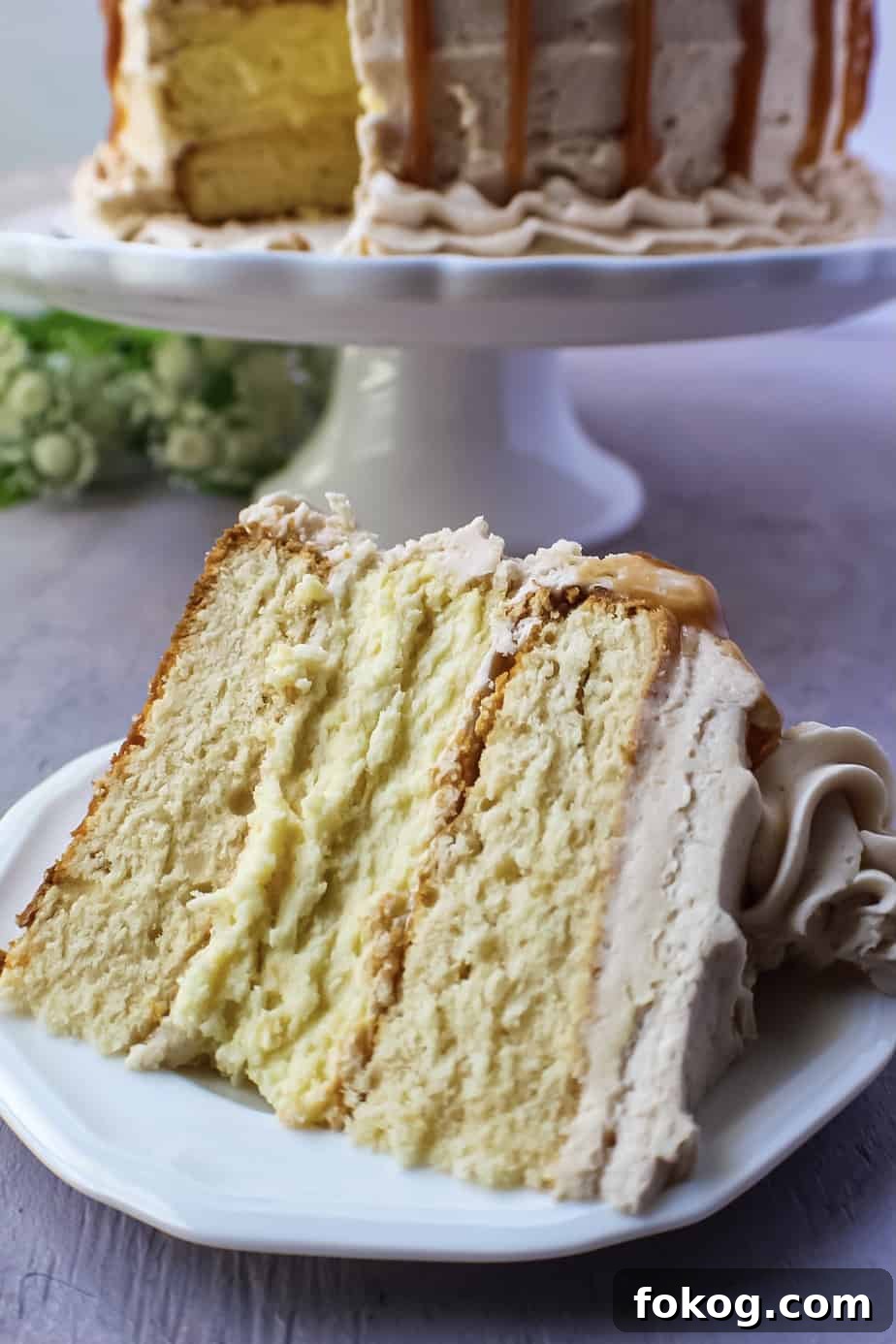
About this Caramel Cheesecake Layer Cake
This cake isn’t difficult, but it does take time because it combines two different elements: a cheesecake layer and caramel cake layers. I like to make the cheesecake first and let it set overnight, then prepare the cakes the next day and assemble. You can complete everything in one day if needed, but starting the cheesecake early gives it time to chill and develop the best texture.
The recipe uses a homemade salted caramel in both the cake batter and the buttercream. Make the caramel well in advance and let it cool to room temperature before adding it to batters or frosting.
Use pans of the same size for all three layers to ensure the cake stacks neatly. I use 9-inch cake pans for the cheesecake and cake layers. For the cheesecake pan I press nonstick aluminum foil into the bottom and up the sides so I can lift the cheesecake out easily once it is chilled.
For frosting, I use a salted caramel buttercream. Make the buttercream just before frosting or beat it briefly in the mixer to confirm the right consistency for smoothing.
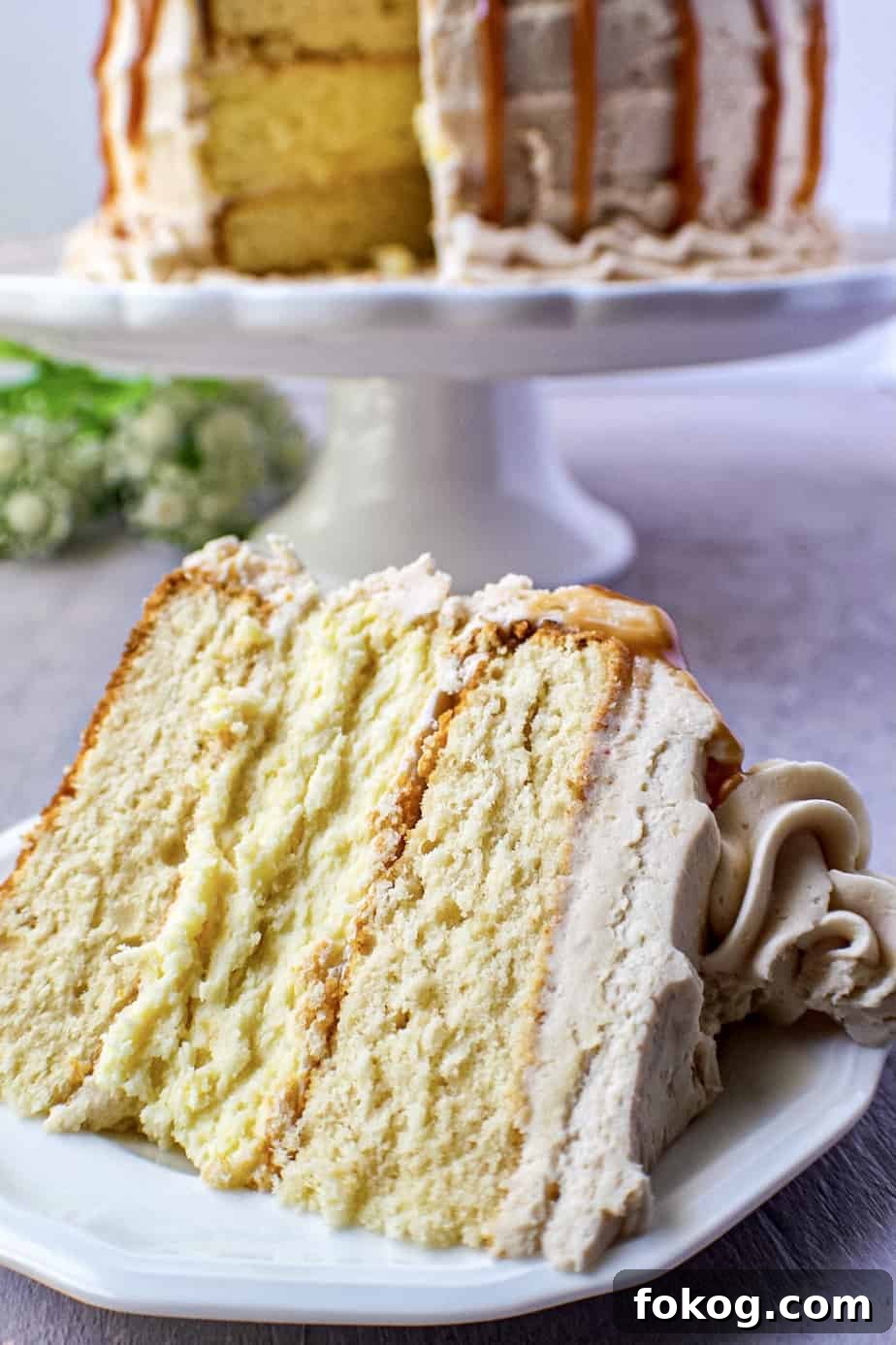
The final result is a creamy vanilla cheesecake sandwiched between moist caramel cake layers, finished with salted caramel buttercream and a caramel drip. The contrast between sweet caramel and a touch of salt is delightful—this cake is a crowd-pleaser.
How To Make the Homemade Caramel Sauce
My preferred method is simple and produces a deep, rich caramel flavor. Gather everything first so the process moves smoothly.
You will need:
- large pot
- whisk
- granulated sugar
- water
- heavy cream (room temperature)
- unsalted butter (room temperature)
- salt (for salted caramel, optional)
Combine sugar and water in the pot and stir just to dissolve. After this point, do not stir—the sugar can crystallize. Place the pot over medium-high heat and bring to a boil, watching closely. When the mixture turns a deep amber color (5–10 minutes depending on heat), remove it from the heat immediately.
Slowly pour in the room-temperature heavy cream while whisking; the mixture will bubble vigorously. When incorporated, add the butter and whisk until smooth. Return briefly to the heat and simmer for about 2 minutes. If making salted caramel, add salt to taste once cooled slightly.
Transfer the caramel to a heatproof container and let it cool to room temperature. The sauce will thicken as it cools. Store at room temperature overnight or refrigerate for longer storage; if refrigerated, warm gently to room temperature before using in batters or frosting.
Important Tips for Making the Caramel Cake
Prep pans carefully. Grease pans and line the bottoms with parchment circles so cakes release cleanly.
Cream butter and sugar thoroughly. Beat softened butter and sugar on high for 3–5 minutes until very light and fluffy—this helps create a tender, airy cake.
Measure accurately. Baking is precise—sift flour and measure ingredients carefully for consistent results.
Scrape the bowl. Use a rubber spatula between steps to ensure even mixing.
Don’t open the oven while baking. Maintain steady oven heat so the cake rises and bakes evenly.
Cool completely before frosting. Even slight warmth can cause frosting to slide, so allow cakes to cool fully.
Important Tips for Making the Vanilla Cheesecake
Use the same pan size as the cake layers. That ensures the cheesecake layer fits perfectly between the cake rounds.
Avoid overbeating. Mix the cheesecake on low; you want a dense, creamy texture, not fluffy. Use room-temperature cream cheese for smooth results.
Use a water bath. A water bath helps the cheesecake bake gently and reduces risk of cracking. If preferred, place a pan of water on a lower rack to add moisture to the oven.
Cool in the oven first. After baking, turn off the oven and leave the cheesecake inside—first with the door closed for 30 minutes, then cracked for another 30 minutes—so it cools gradually and minimizes cracks.
Important Tips for the Caramel Drip
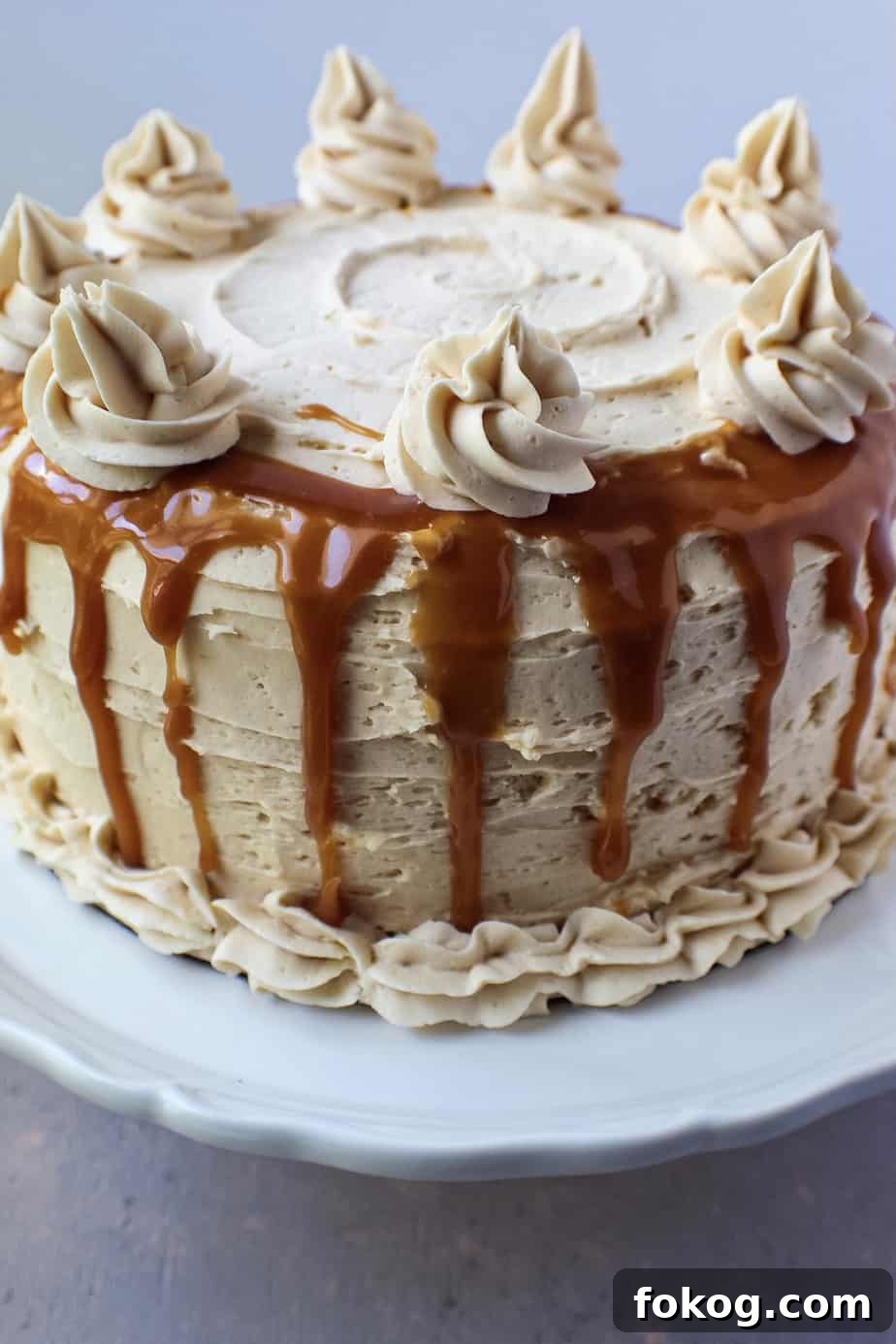
Chill the frosted cake well before adding the drip—about one hour in the refrigerator. The caramel for the drip should be room temperature and slightly thick so it stops before reaching the bottom edge. Never use hot caramel to drip, as it will melt the buttercream.
Test a drip on the back of the chilled cake to confirm consistency. Use a teaspoon, squeeze bottle, or a snipped plastic bag to control drips; a spoon gives fine control for placement.
You Will Also Love This Lemon Cheesecake Layer Cake!
📖 Recipe
Caramel Cheesecake Layer Cake
Ashley Boyd
Ingredients
Caramel (make in advance)
- 1 ½ cups granulated sugar
- ⅓ cup water
- 225 mL heavy cream, room temperature
- ¾ cup unsalted butter, room temperature
- ½ tsp sea salt (optional, to taste)
Cheesecake Layer
- 24 oz (3 blocks) cream cheese, room temperature
- 1 cup sugar
- 3 tbsp all-purpose flour
- 1 cup sour cream
- 1 tbsp vanilla extract
- 4 large eggs, room temperature
Caramel Cake Layers
- 2 ¼ cups all-purpose flour
- 2 ¼ tsp baking powder
- ¾ tsp salt
- ¾ cup unsalted butter, room temperature
- 1 cup granulated sugar
- 3 large eggs, room temperature
- 1 ½ tsp vanilla
- ½ cup prepared homemade caramel
- 1 cup buttermilk, room temperature
Frosting (makes two batches)
- 1 cup unsalted butter, room temperature
- 4 cups powdered sugar
- 2 tsp vanilla extract
- ½ cup prepared homemade caramel, room temperature
- ¼ tsp salt
Instructions
For the Caramel (make in advance)
- Place sugar and water in a medium pot, stir to combine, then stop stirring. Cook over medium-high heat until the mixture turns a deep amber color.
- Remove from heat immediately. Slowly pour in room-temperature heavy cream while whisking—the mixture will bubble up.
- Whisk in the room-temperature butter until smooth. Return to heat briefly and simmer 2 minutes, whisking constantly. Add salt to taste if desired.
- Let the caramel cool to room temperature (about 2 hours) before using.
For the Cheesecake
- Preheat oven to 300°F. Line a 9-inch cake pan completely with aluminum foil, pressing it flat so you can lift the cheesecake out later.
- In a large bowl, mix cream cheese, sugar, and flour on low until combined. Scrape the bowl.
- Add sour cream and vanilla, mixing on low until smooth.
- Add eggs one at a time, mixing slowly and scraping the bowl after each addition.
- Pour batter into the lined pan. Place the pan inside a larger pan and add warm water to come halfway up the cheesecake pan (or place a pan of water on a lower rack).
- Bake 1 hour. Turn off the oven and leave the cheesecake inside with the door closed for 30 minutes, then crack the door and leave another 30 minutes.
- Remove and chill until firm, about 5–6 hours or overnight.
For the Caramel Cake
- Preheat oven to 350°F. Grease two 9-inch round pans and line bottoms with parchment circles.
- Whisk flour, baking powder, and salt in a bowl and set aside.
- Cream butter and sugar in a stand mixer on high for 3–5 minutes until light and fluffy. Scrape the bowl.
- Beat in eggs one at a time on low, then add vanilla and ½ cup prepared caramel.
- Alternate adding the flour mixture and buttermilk on low until combined. Divide batter evenly between pans and bake on the middle rack for about 30 minutes, or until a toothpick comes out clean.
- Cool 10 minutes in pans, then invert onto a rack, remove parchment, and cool completely.
For the Frosting
- Beat butter on high in a stand mixer until pale and fluffy, 5–6 minutes, scraping as needed.
- On low, add powdered sugar one cup at a time, scraping after each addition, then add vanilla.
- With mixer on low, add the room-temperature caramel and a pinch of salt. Increase speed to medium and mix 2 minutes until smooth.
Assembling the Cake
- Place one cake layer on a platter and spread about 1 cup frosting evenly.
- Lift the chilled cheesecake from its pan using the foil, remove the foil, and place the cheesecake on top of the frosted cake layer.
- Spread another cup of frosting over the cheesecake, then top with the second cake layer.
- Level gently, then frost the top and sides with remaining buttercream. Smooth or texture as preferred.
- Chill the frosted cake for about an hour, then drizzle room-temperature caramel around the edges to create a drip. Pipe dollops of frosting around the top edge if desired.
Nutrition
Share your photos and a rating if you made it—feedback is always appreciated.