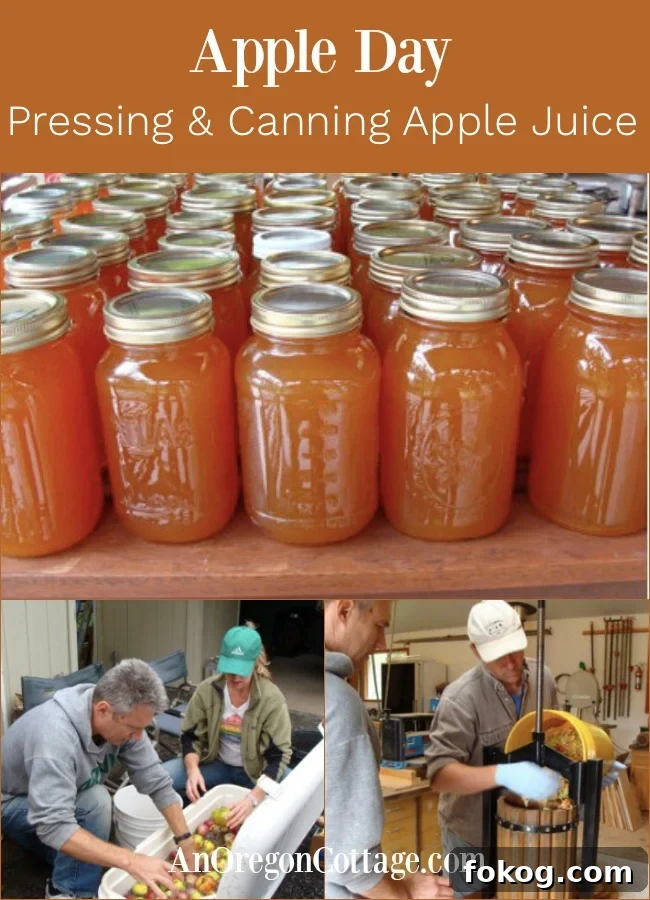
One of our family’s favorite traditions is our annual “Apple Day.” Extended family gathers each autumn to pick apples in the morning and press them into fresh juice or cider in the afternoon. We cherish the time together, the seasonal activity, and the fact that we end up with pure, home-pressed juice to enjoy all year.
We source apples wherever we can find them. There’s only one rule: they have to be free.
Frugality runs deep in our family.
Juicing doesn’t require picture-perfect fruit, and we live in an area where apple trees are everywhere—many yards and roadsides are dotted with trees. Every year we see apples left to rot beneath branches as we drive by.
Not this year. The apple crop was poor, so we had to be more persistent than usual.
We called everyone we knew—and even some people we didn’t—searching for apples. We picked small and scabby fruit we might have discarded in better years. In the end…
We found enough.
There’s always something for everyone to do on Apple Day besides picking. We haul the apples to my stepfather’s house, wash them, and feed them into a sturdy electric crusher.
Crushing is a messy job—my daughter and I always come home smelling like apples and splattered with juice.
The crushed apples are funneled into the press. Be ready for apple pieces to land on your shoes.
Then the strong volunteers—often jokingly called “the brawny men”—take turns turning the handle and pressing the mash. It’s hard work, but everyone can help if they want to.
Apparently the action was so energetic that my photo turned out blurry.
As a side note, we used an electric press for a few years but discovered that manual pressing often yields more juice than the electric model.
The juice is filtered as it leaves the press. That first stream goes through one of several filters—sometimes two or three passes are needed to clarify the liquid. And yes, you should always catch a cupful to taste the ultra-fresh juice (or cider—we never quite agree on the term).
Once pressed and filtered, the juice is transferred into two large containers and taken to my sister’s house.
They rest overnight, and the next day anyone available for “canning” gathers to put the juice into quart jars so it will be shelf stable.
We work as a team: heating the juice, ladling it into jars, sealing and processing them in a boiling-water bath for the recommended time, then removing and cooling the jars. It’s repetitive, steady work, but the assembly-line process moves quickly when many hands help.
By the end of the weekend we had canned 148 quarts of delicious apple juice (or cider—take your pick). More importantly, we shared a day of laughter, teamwork, and memories that will keep us coming back each year.
Apple Day gives us lasting jars of juice and a treasured tradition that brings the whole family together.