
Are you wondering how to forage dandelions and what to do with them? This guide covers everything you need to know, including practical harvesting tips and tasty recipes that showcase this common but underrated herb.

Many people dismiss dandelions as persistent lawn weeds, but they have a long history as a useful plant for food and traditional medicine. Dandelions were intentionally brought to North America centuries ago for those purposes, and today they remain a valuable wild edible.
In recent years, gardeners and foragers have worked to restore the dandelion’s reputation. They are one of the earliest nectar sources for bees in spring, and they offer us nutritious greens and edible flowers as well.
Dandelions provide fresh spring nutrition and can be a delightful addition to your kitchen when foraged responsibly.
I have a soft spot for dandelions from childhood — picking small bouquets in the yard felt like finding tiny treasures. My mother would often display our bundles on the kitchen counter, and those simple moments made dandelions feel special rather than bothersome.
Now I see them as much more than bright yellow blooms on the lawn: they’re a versatile plant with edible leaves, roots, and flowers.
Why forage dandelions?
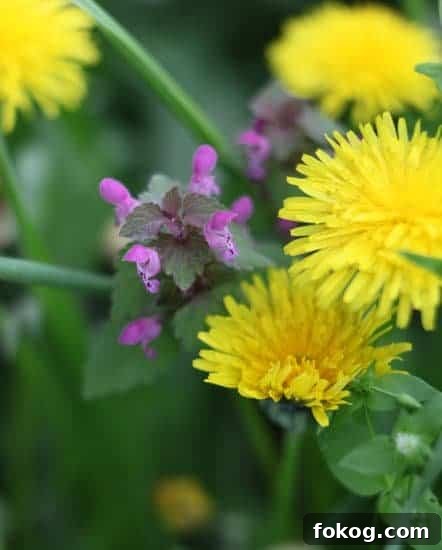
Knowing how to source food beyond the grocery store is a useful skill. In an emergency or simply as a way to diversify your diet, wild edibles like dandelions can boost your intake of vitamins and minerals, especially when gathered from unfarmed, nutrient-rich soils.
Always harvest dandelions from areas that have not been treated with pesticides or herbicides. Many lawns are treated to kill dandelions, so be mindful about location when foraging.
Foraging can also shave a little off your grocery bill. While it’s not a complete solution for saving money, adding free wild greens to your meals can be an effective supplement.
Historically, dandelions have been used for a range of traditional remedies and as a cleansing herb. Here, they’re presented as a nutritious wild food rather than a medical treatment. Dandelion greens are especially nutrient-dense, offering vitamins A, C, and K and minerals often found in cultivated leafy greens.
Importantly, the entire plant is edible when harvested and prepared properly.
How to Harvest Dandelions

Start with the leaves, which taste a bit like spicy arugula when young.
Dandelion Greens
Harvest young dandelion leaves in early spring and again in the fall, before the plants flower. Younger leaves are tender and milder; older leaves become tougher and more bitter. Use scissors or a knife to snip leaves close to the base to encourage regrowth.
Young greens are excellent raw in salads or on sandwiches. Mature leaves can be blanched briefly and sautéed in oil to reduce bitterness and soften their texture.
Recipe ideas to try: Dandelion salad with pecan vinaigrette, dandelion salad with roasted golden beets, and dandelion pesto.
For tougher greens, blanch, then sauté with garlic and olive oil; serve as a side or mix into grain bowls and pasta dishes.
Dandelion roots
- Dig up and wash dandelion roots thoroughly.
- Dry roots in a well-ventilated area until fully dehydrated.
- Grind the dried roots finely in a food processor.
- Brew the ground root like coffee in a French press or drip brewer for a caffeine-free roasted beverage.
Dandelion “coffee” is naturally bitter, so sweetener or creamer is commonly added. The roasted root provides a warm, earthy alternative to regular coffee and can support digestion when enjoyed as part of a balanced routine.
You can also dry and capsule ground root for a convenient supplement form if desired.
Dandelion Blossoms
Dandelion flowers are sweet and floral when used fresh, and they make a charming garnish for desserts or salads. One popular preparation is to dip the whole flower heads in a light tempura or batter and shallow- or deep-fry them until crisp for a delicate fritter.
Choose bright, healthy blooms, and rinse gently before using to avoid crushing the petals.
Flower-based ideas: fried dandelion fritters, dandelion blossom honey butter, lemon and dandelion biscuits, dandelion lemon bars, or homemade dandelion jelly made from brewed petals.
Other Uses for Dandelions
Beyond the kitchen, dandelions can be incorporated into DIY natural products. Traditional and modern uses include salves, lip balm, infused oils for topical use, and tinctures made from flowers or roots. When preparing any home remedies, source plants from chemical-free areas and follow safe, tested recipes.
Will you still think of dandelions as just an annoying yard weed? For many foragers and cooks, these resilient plants are a welcome springtime ingredient and a reminder that useful food can often be found close to home.
The definition of a “weed” is simply a plant growing where you don’t want it. Seen that way, a dandelion can be both an invader of lawns and a valuable wild green — and in places where they’re less common, finding them feels like a small seasonal gift.