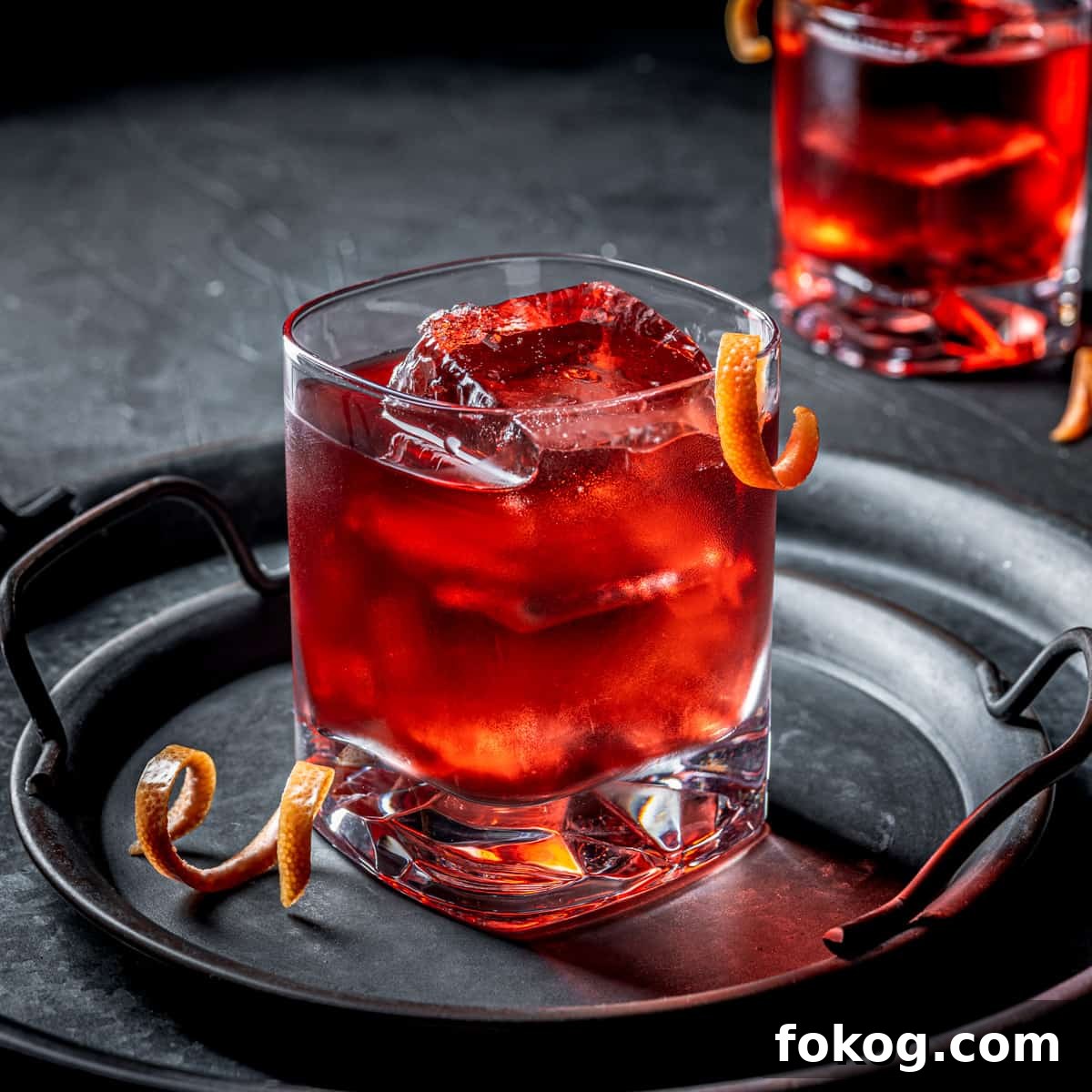
A Negroni is one of the most enduring classic cocktails. The Classic Negroni consists of equal parts gin, Campari, and sweet red vermouth. It is bold, bitter, and spirit-forward, with a balanced sweetness and herbal complexity. Recently the Negroni has enjoyed a strong resurgence in bars and at home as people rediscover its straightforward elegance. Below you’ll find a clear, step-by-step guide to building the Classic Negroni, plus ingredient notes, simple substitutions, and a few popular variations.
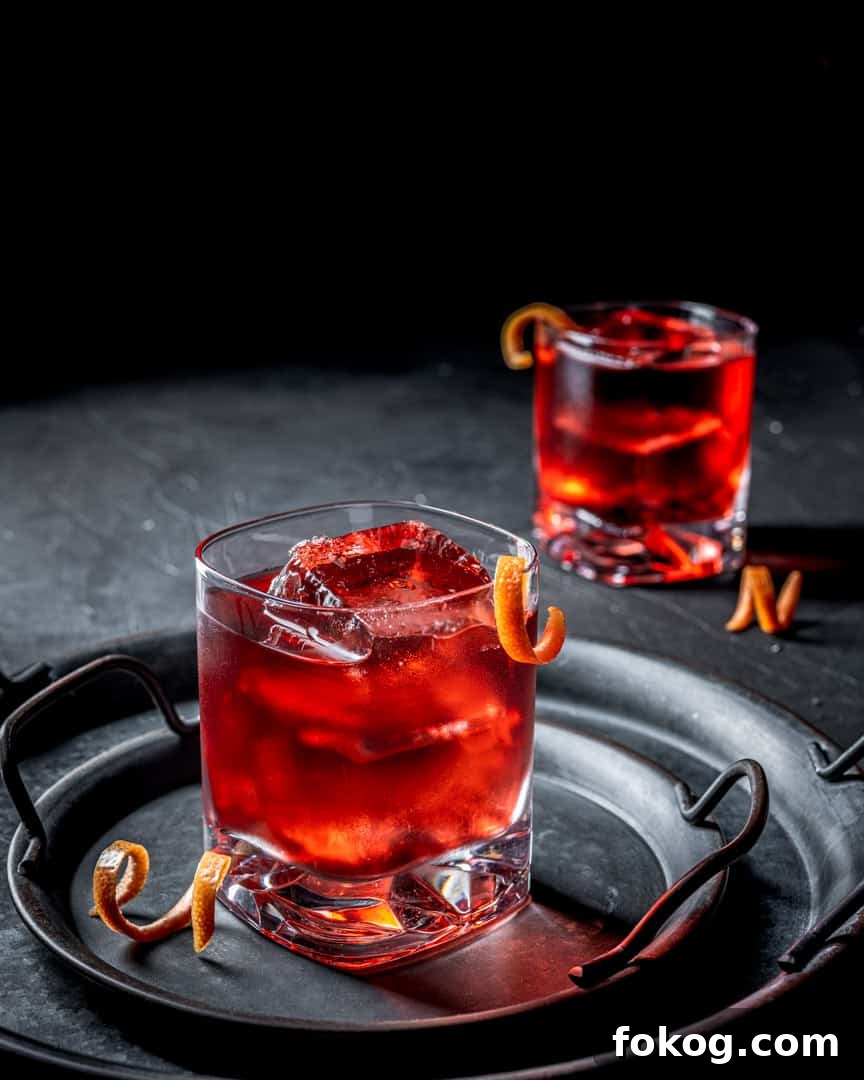
The Negroni originated in Florence, Italy in 1919 and has since become a globally recognized aperitif. Its combination of gin, the bitter orange liqueur Campari, and sweet vermouth creates a complex profile that is simultaneously bitter, slightly sweet, and aromatic. While some people describe the Negroni’s bitterness as an acquired taste, many fans appreciate that sharp edge for its palate-cleansing quality before a meal. The cocktail is also a favorite for its simplicity — just three ingredients — and for how easily it adapts to variations and seasonal tweaks.
You may also have encountered modern spins on the Negroni, such as the Negroni Sbagliato, which replaces gin with sparkling wine or Prosecco for a lighter, bubblier version. That variation has helped broaden the Negroni’s appeal, but for purists the classic, stirred Negroni remains the benchmark.
For seasonal inspiration, try the classic base recipe and then experiment with vermouths, gins, or bitter liqueurs to find the balance you prefer. Below are clear ingredient definitions, the standard method, and ideas for substitutions and variations so you can tailor the Negroni to your taste.
Ingredients
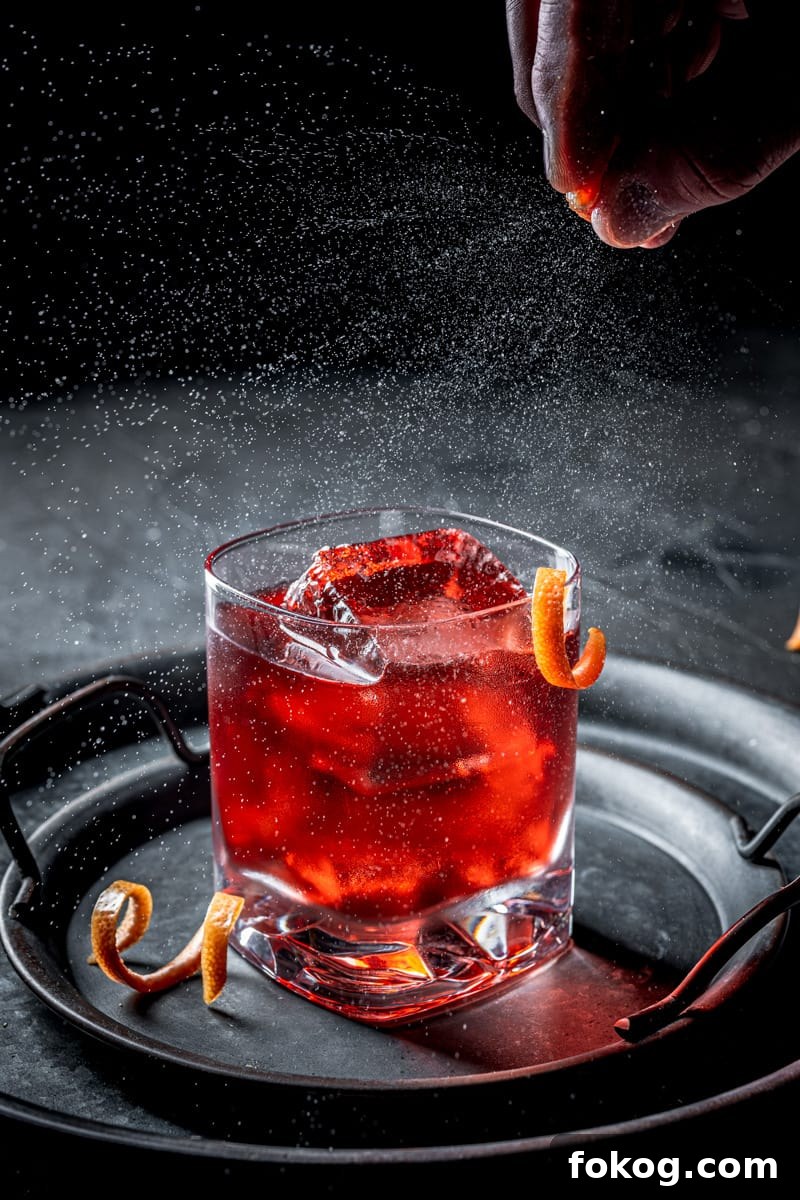
The Classic Negroni uses equal parts Campari, a London Dry gin, and sweet red vermouth. The drink is traditionally garnished with an expressed orange peel or an orange slice to add citrus oils and a fresh aroma.
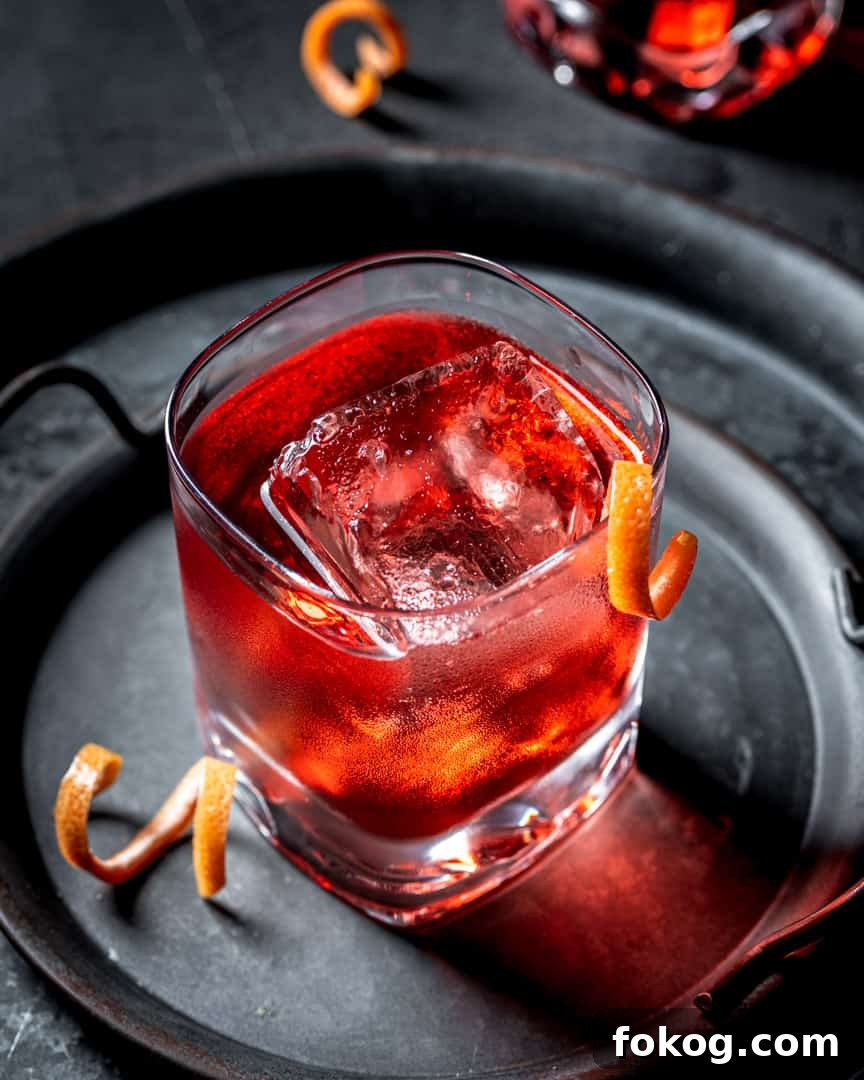
- Gin: London Dry gin is traditional; choose a quality gin with juniper-forward character to stand up to Campari.
- Campari: This Italian bitter liqueur provides the Negroni’s signature bitterness and vivid reddish-orange color.
- Sweet red vermouth: Adds sweetness, herbal spice, and depth. Use a fresh, quality vermouth for best results.
- Orange peel or slice: Expressed orange oil brightens the aroma; an orange slice can also be used as a garnish.
- Ice: Serve over a large ice cube in a rocks glass or serve up in a chilled glass without ice.
See the recipe section below for exact quantities for a single serving.
Instructions
The Classic Negroni is easy to make and requires no specialized equipment beyond a mixing glass and a stirring spoon, though a rocks glass and a large ice cube complete the presentation.
- Fill a mixing glass with ice.
- Add equal parts gin, sweet vermouth, and Campari.
- Stir briskly for roughly 20 rotations to chill and slightly dilute the drink.
- Strain into a rocks glass over a large format ice cube or serve up in a chilled glass if preferred.
- Express an orange peel over the glass to release the oils and drop it in as a garnish, or add an orange slice.
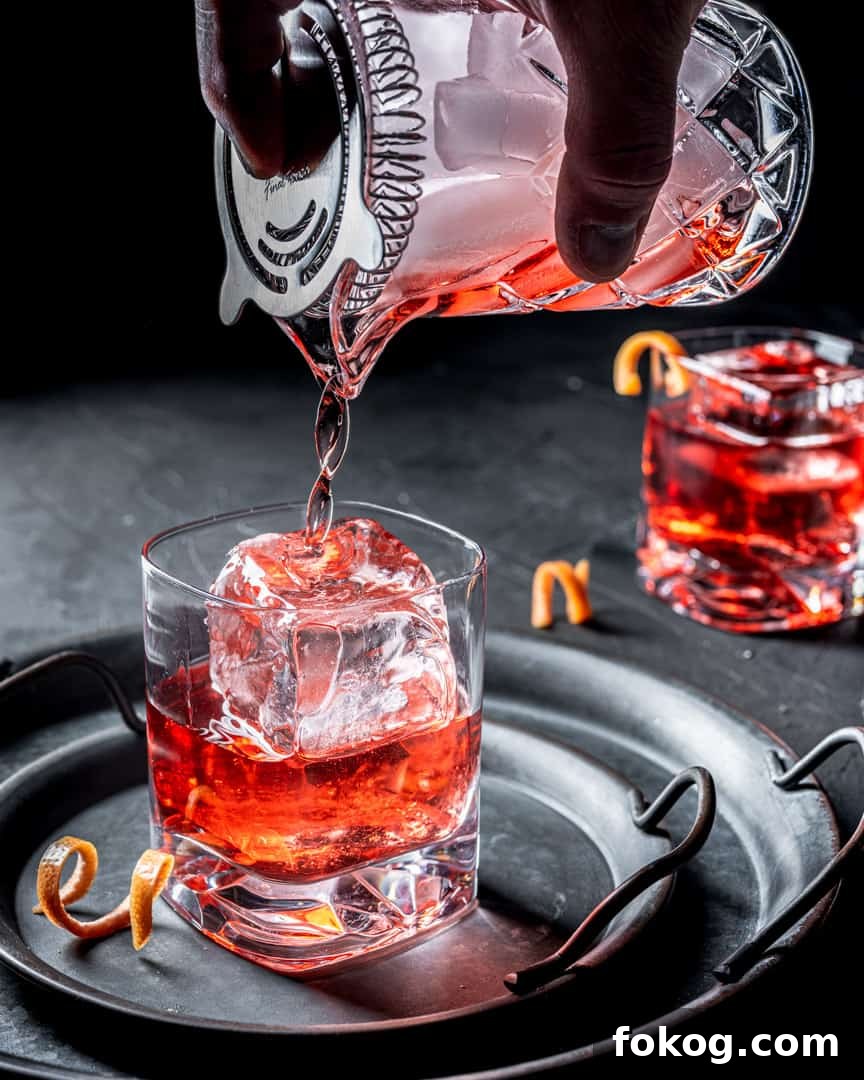
Hint: Never shake a Negroni. Shaking adds too much air and dilution, which alters the intended mouthfeel and texture of this spirit-forward cocktail.
Substitutions
If you want to vary the garnish, an orange slice is traditional and authentic to many Italian bars. Dehydrated orange wheels make attractive garnishes and last longer for serving guests. Blood orange can be an interesting seasonal substitute when available. For ingredients, switching vermouths or trying a different style of gin will shift the balance and character, but keep the equal-parts ratio as a reliable starting point.
Variations
The Negroni lends itself well to substitutions that create distinctly different cocktails while retaining a similar structure. Popular variations include:
- Boulevardier: Gin is replaced with whiskey for a richer, warmer profile.
- Cynar Negroni: Campari is replaced with Cynar, an artichoke-based bitter liqueur, for an earthier bitterness.
- Aperol Negroni: Aperol substitutes for Campari to create a softer, less bitter version.
- Cardinale: Uses dry white vermouth in place of sweet red vermouth for a drier result.
- White Negroni: Employs Lillet Blanc and Suze instead of red vermouth and Campari, and is typically garnished with a lemon twist.
Explore these variations to find the version that best suits your palate.
Equipment
A cocktail mixing glass or a sturdy bar glass and a long bar spoon are all you need to make a proper stirred Negroni. A jigger or measuring tool helps keep the equal-parts ratio precise. A rocks glass and a large-format ice cube give the finished drink a classic presentation.
Storage
Negronis are excellent for batching. Combine equal parts gin, Campari, and sweet vermouth in a pitcher or bottle and refrigerate. When ready to serve, pour the premixed Negroni into a mixing glass with ice, stir to chill and dilute slightly, and then strain into individual glasses. This method is great for gatherings and speeds service while preserving the balanced flavors.
Top tip
Use a fresh, high-quality sweet vermouth and your preferred London Dry gin. Vermouths vary dramatically in complexity; a better vermouth will greatly enhance the final cocktail. If you have a go-to vermouth for other classic cocktails like a Manhattan, try that here to compare the results.
FAQ
A classic Negroni is equal parts gin, Campari, and sweet red vermouth, served over ice or strained up, and garnished with an orange slice or twist.
Campari and Aperol are related but distinct. Campari is more bitter and assertive; Aperol is milder and slightly sweeter. The choice affects the bitterness and overall intensity—Campari is traditional and more bitter, Aperol yields a gentler drink.
Shaking introduces more aeration and dilution, changing the drink’s mouthfeel and texture. Stirring chills and dilutes more gently, preserving the intended structure of this spirit-forward cocktail.
Yes. Traditionally the Negroni is served as an aperitif before a meal to stimulate the appetite, though it can certainly be enjoyed any time.
Because it combines three alcoholic ingredients—gin, Campari, and sweet vermouth—a Negroni is spirit-forward and sits on the stronger side compared with many mixed cocktails.
📖 Recipe

Classic Negroni Cocktail Recipe
Ingredients
- Ice
- 1 ounce London Dry Gin
- 1 ounce Sweet Red Vermouth
- 1 ounce Campari
- Orange peel for garnish
Instructions
- Add ice to a mixing or bar glass. Pour in the gin, sweet vermouth, and Campari in equal parts.
- Stir briskly with a bar spoon for about 20 turns to chill and dilute slightly.
- Strain into a rocks glass over a large ice cube or into a chilled coupe if serving up.
- Express an orange peel over the drink to release the oils, rub the peel on the rim if desired, and use it as a garnish. Serve immediately.
Nutrition
Calories: 164 kcal · Carbohydrates: 9 g · Protein: 0.02 g · Sodium: 0.3 mg
Related
If you enjoy the Classic Negroni, try exploring other stirred, spirit-forward cocktails or seasonal twists that highlight similar herbal and bitter notes. Pair it with savory Italian dishes, grilled meats, or rich, tomato-based recipes to complement the drink’s bitter-sweet profile.
Pairing
Classic pairings for a Negroni include Italian antipasti, aged cheeses, grilled or roasted meats, and hearty pasta dishes. The cocktail’s bitterness and acidity help cut through rich flavors and refresh the palate between bites.