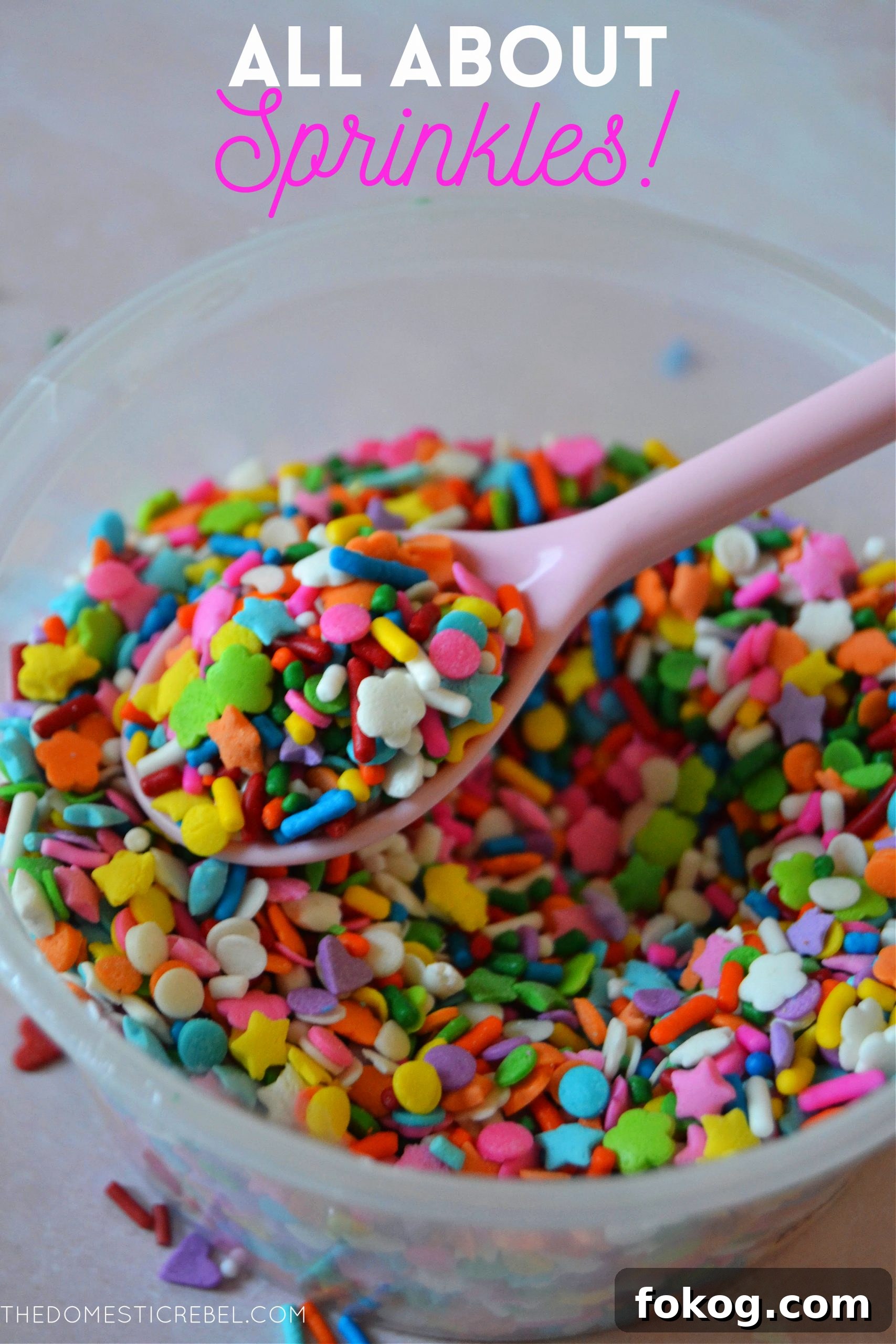
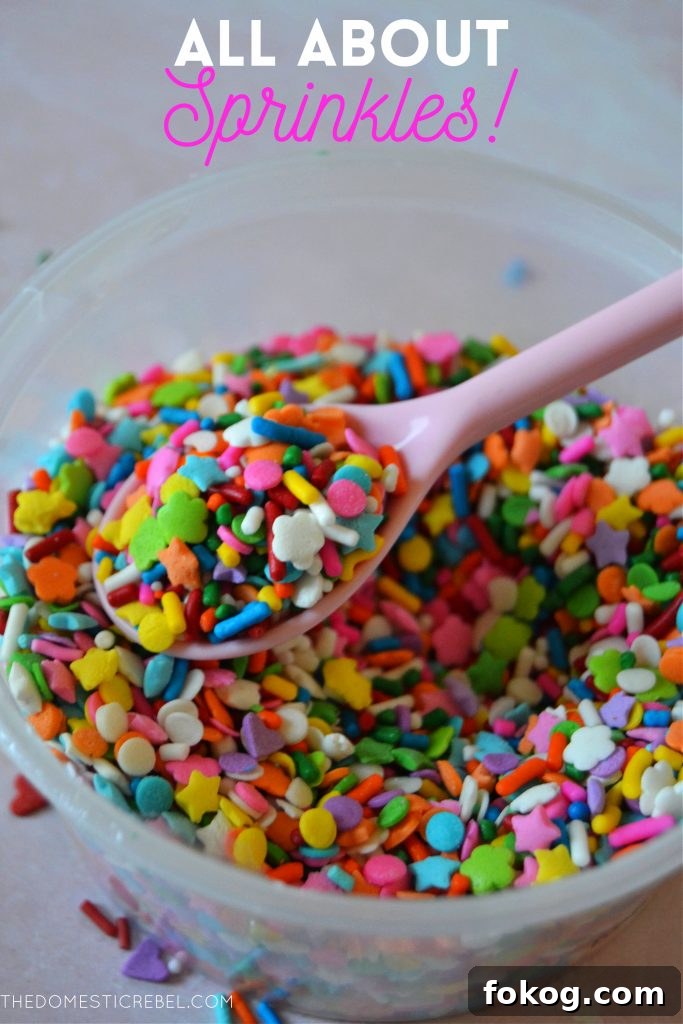
This Guide to Sprinkles is essential for any baker. Discover the main types of sprinkles, how they differ, and the best uses for each. You’ll also learn an easy method to make your own personalized sprinkle blend.
Sprinkles are more than decoration—they add texture, crunch, and a bright pop of color. However, not all sprinkles behave the same: some can bleed color, others are too hard for certain desserts, and some hold up well in batter. Understanding their differences helps you choose the right sprinkle for every project.
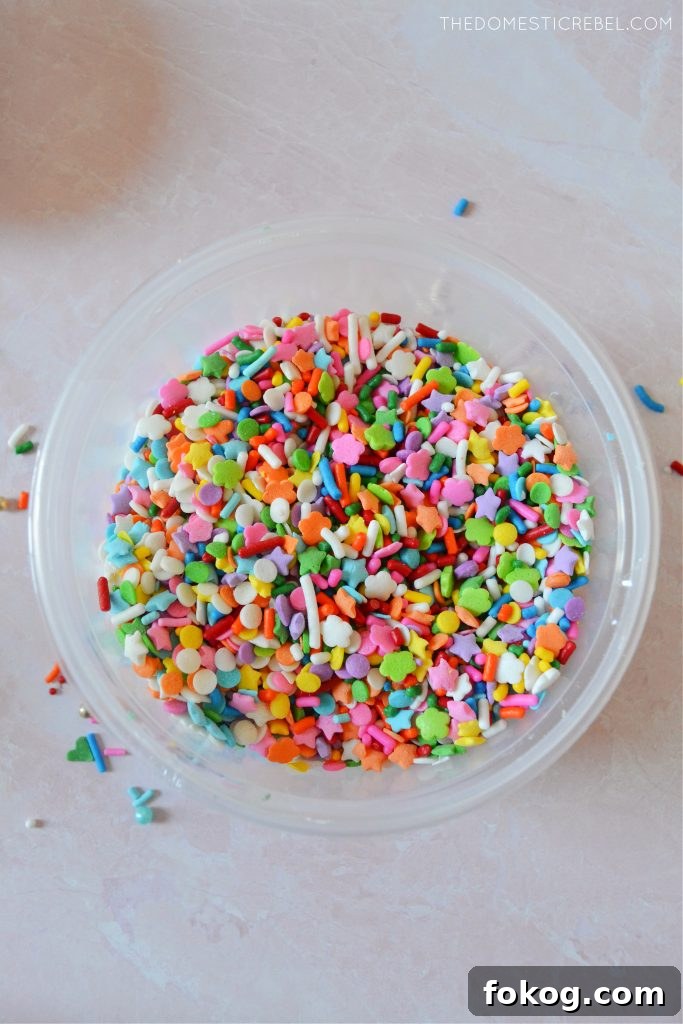
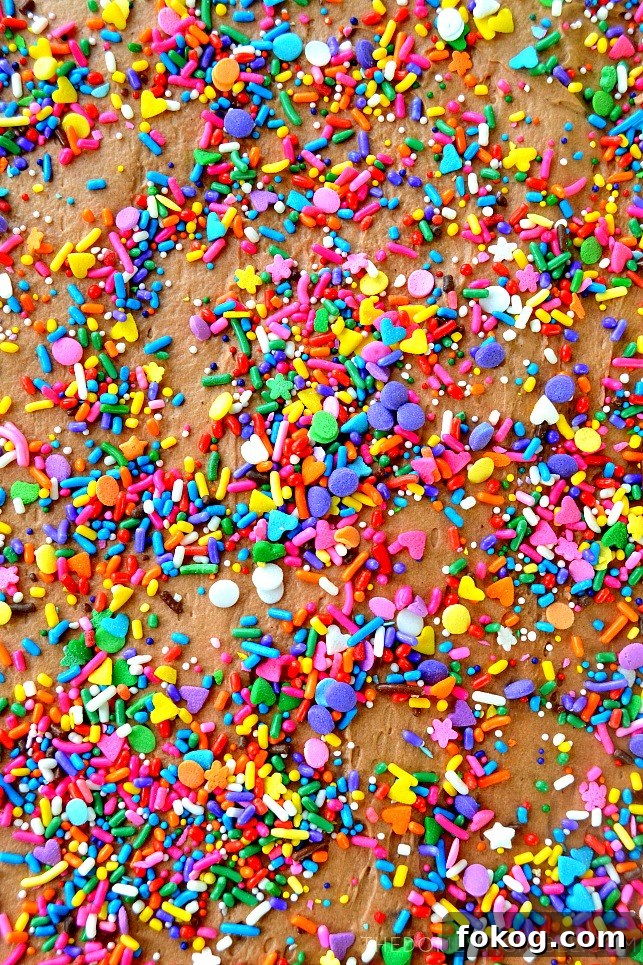 This guide breaks down popular sprinkle types so you’ll know exactly what each one is and when to use it. At the end, I’ll share my simple favorite sprinkle blend recipe—easy, economical, and fun to customize.
First up: the various types of sprinkles.
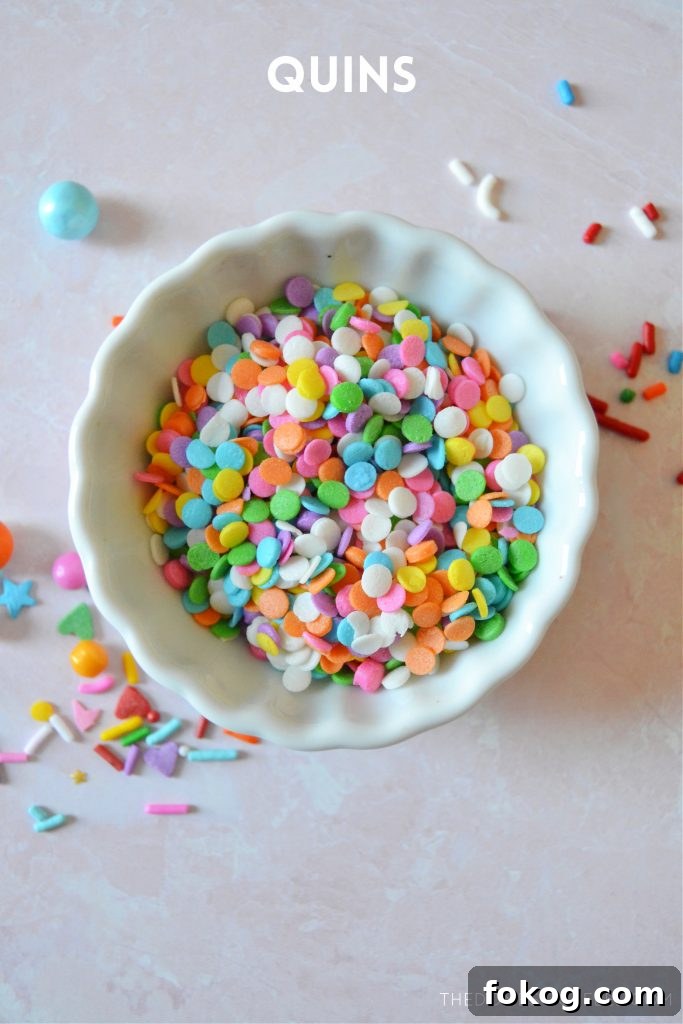
Quins: Also called sequins or confetti sprinkles, quins are thin, flat shapes—flowers, stars, hearts, butterflies, and more. They’re lightweight with a matte finish, so they’re less likely to bleed and are excellent for decorating frosted cakes and cookies. Quins can also be mixed into puddings or soft desserts; they may soften slightly but leave attractive pockets of color.
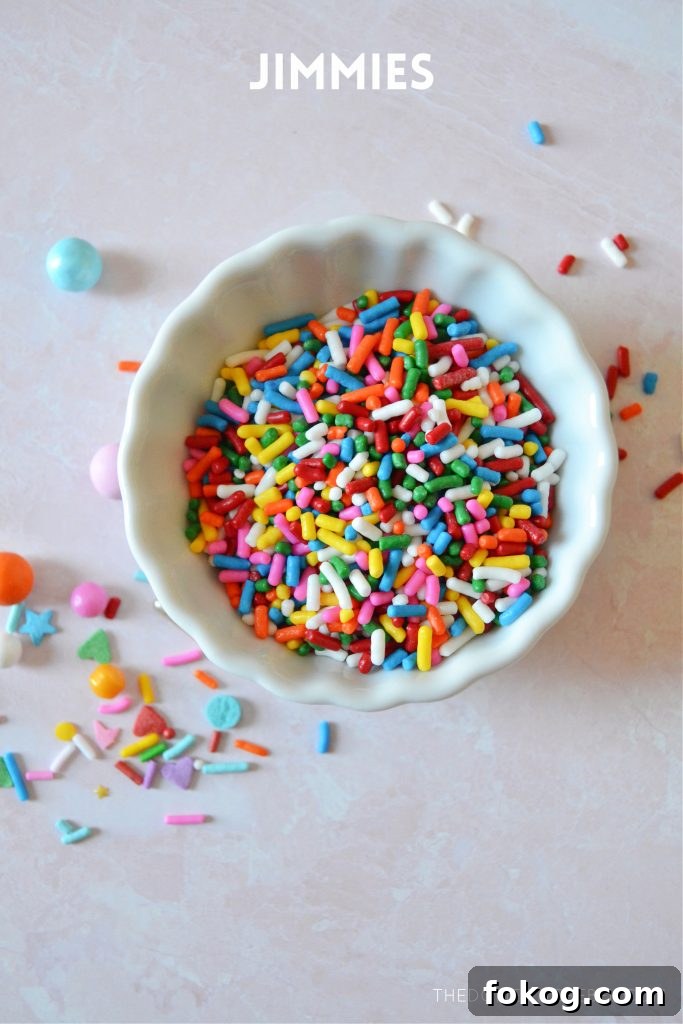
Jimmies: The classic, most-recognizable sprinkle—thin, rod-shaped pieces available in many colors (and in chocolate). Jimmies are versatile: they work well baked into batters and as decorative toppings on cupcakes, ice cream, or frozen yogurt. They resist color-bleeding and retain shape, making them a reliable all-purpose choice.
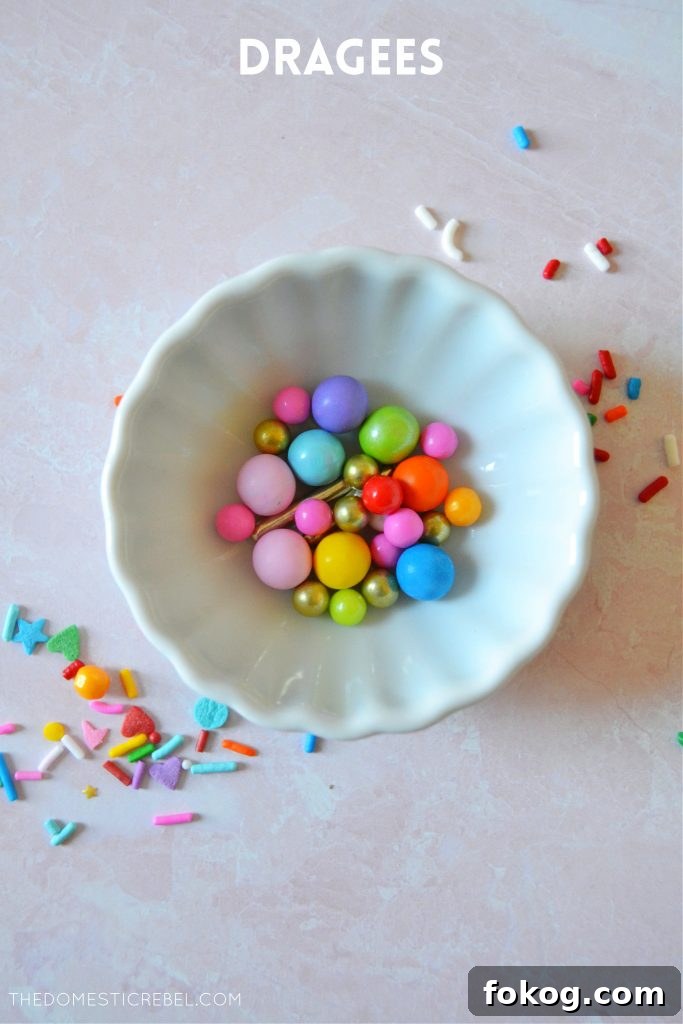
Dragees: Decorative and shiny, dragees are hard, candy-like pieces—often called sugar pearls as well. They can be round or elongated and look striking on cakes and desserts, but their hardness makes them less pleasant to eat. Because of their larger, smooth surfaces, some dragees may be prone to color-bleeding.
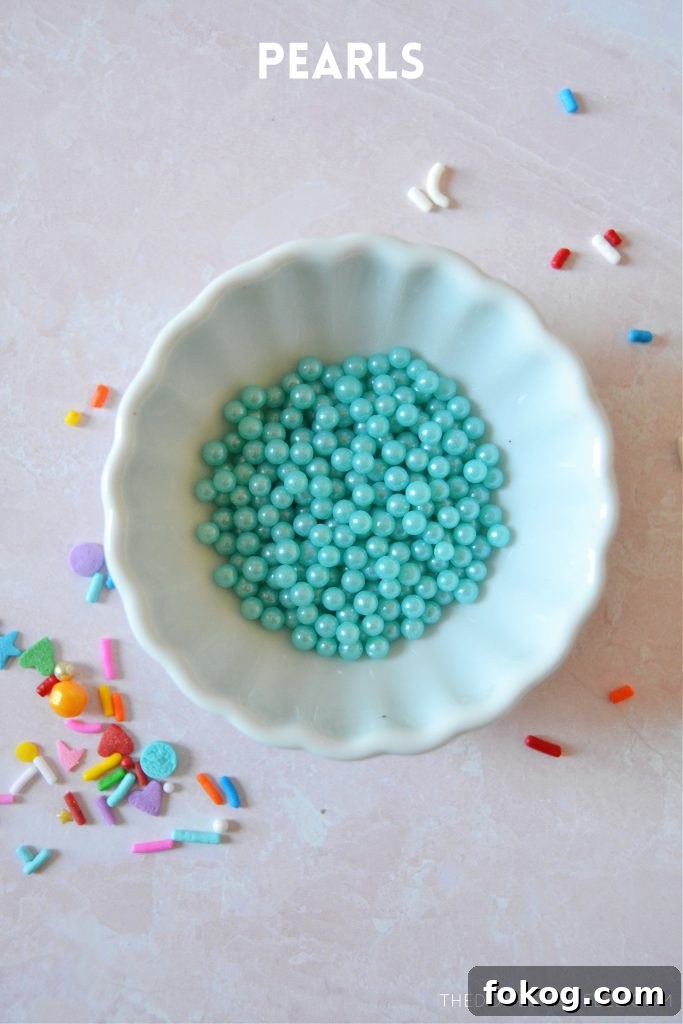
Pearls: A smaller variety of dragee, sugar pearls are easier to chew than larger dragees but still fairly firm. They make an elegant finishing touch on frosted cakes, cupcakes, and cookies, but they’re best used as a garnish rather than mixed into batters.
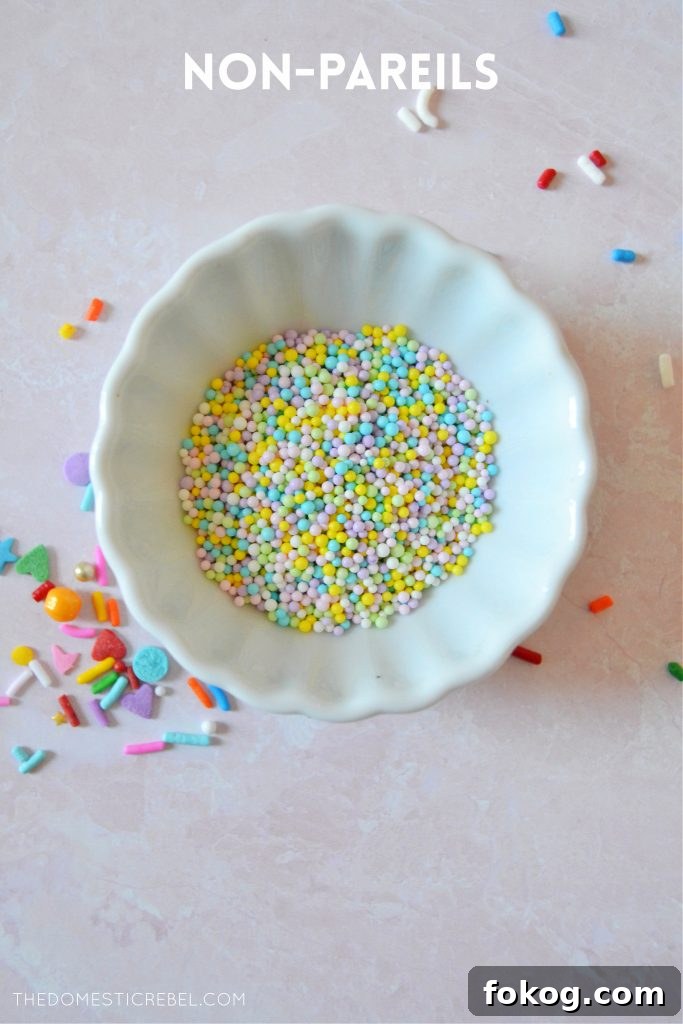
Non-Pareils: Tiny, round, bead-like sprinkles with a delicate crunch and vibrant colors. They’re perfect for finishing frostings, glazes, fudge, and cookies. Non-pareils are not ideal for baking into batters because they can melt, lose their shape, and bleed color, causing streaks in the finished product. Use them as a finishing decoration for best results.
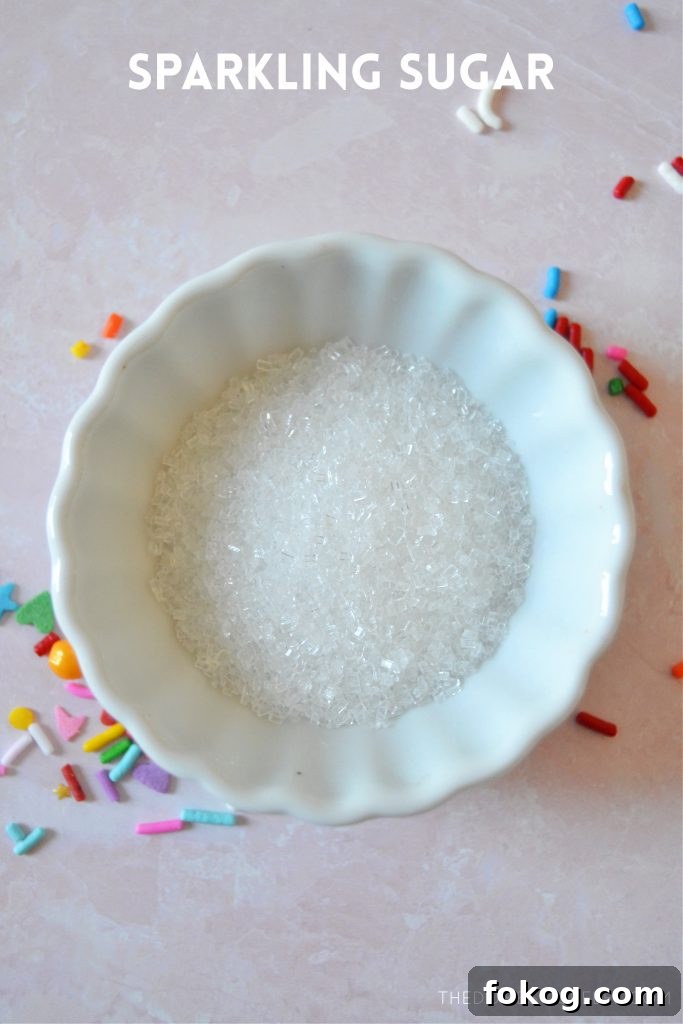
Sparkling Sugar: Coarse, sparkly sugar similar to turbinado or demerara, sparkling sugar adds crunch and shimmer without being hard like dragees. It’s an excellent finisher for truffles, glazed pastries, and chocolate-dipped treats. Available in many colors, it provides a pretty, sparkling accent.
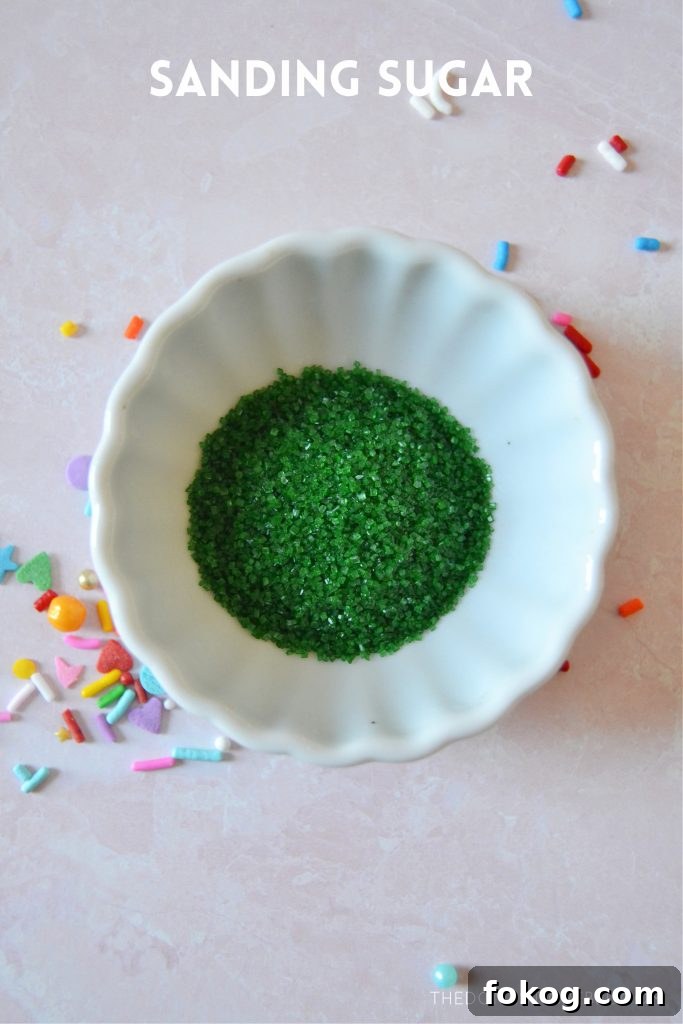
Sanding Sugar: Finer than sparkling sugar but still somewhat coarse—think texture similar to kosher salt. Sanding sugar works well on firm glazes like royal icing, but because the grains are small they can be prone to color-bleeding. Use on harder finishes for best appearance.
How to Make Your Own Sprinkle Blend
Creating your own sprinkle blend is easier and more economical than buying premade mixes. Store-bought blends often include lots of dragees, which can be unappealing if you prefer softer textures. A custom blend lets you choose the colors, textures, and sprinkle types you prefer—and you can make blends suitable for both baking and finishing.
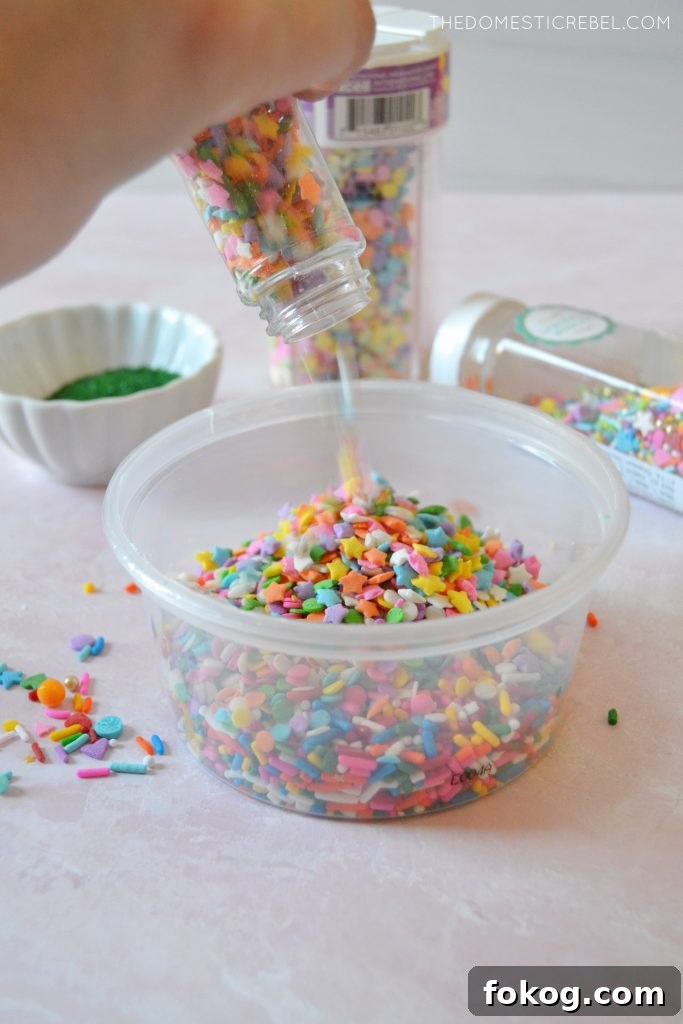
Start with a base of rainbow jimmies—these are widely available in tubs at many stores and are an inexpensive, durable foundation. From there, add quins (such as stars or hearts) to introduce charming shapes and a matte finish that resists bleeding. Mixing quins and jimmies gives you a versatile blend that works both baked in and used as a topper.
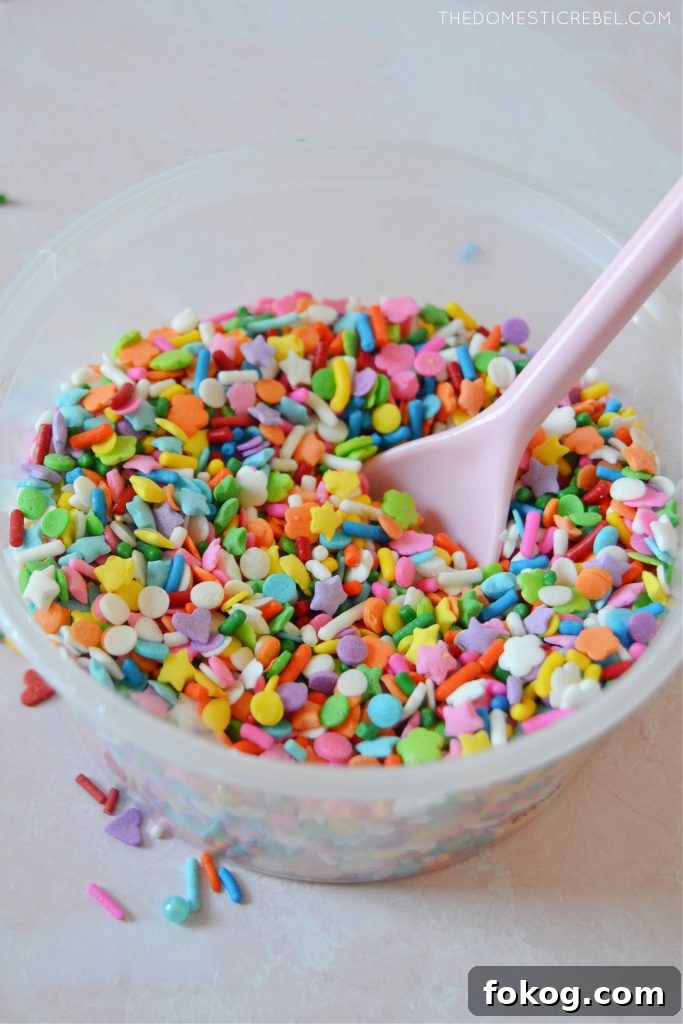
Optionally, you can include a small amount of non-pareils, pearls, or edible glitter to enhance texture and color—just remember that components prone to color-bleeding should be reserved for finishing only. If you want a blend that can be used in batter and as a decoration, stick to quins and jimmies.
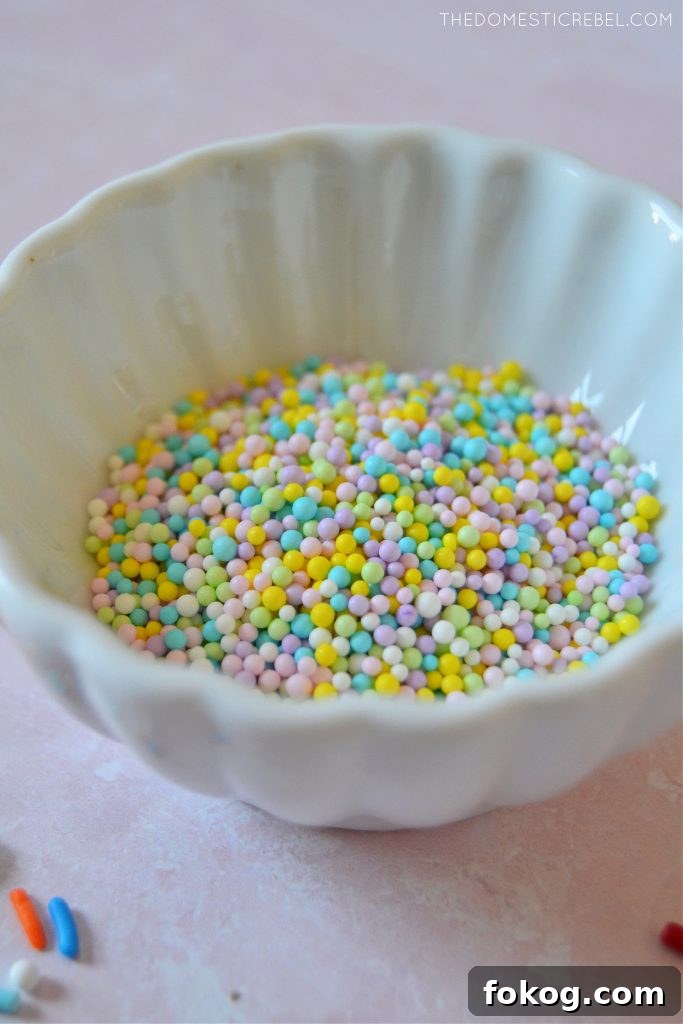
Customize blends for occasions—team colors, baby showers, holidays, or subtle pastels—and adjust proportions depending on how you plan to use the mix. Store your blend in an airtight container to preserve freshness and prevent humidity from affecting texture.
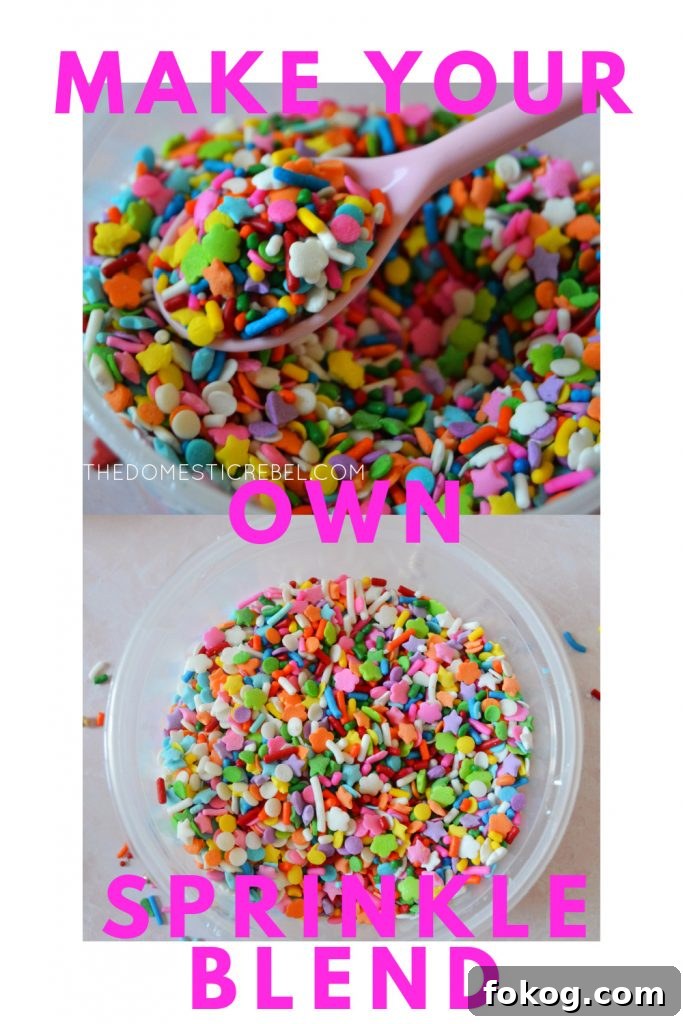
With these tips, you’ll confidently choose the right sprinkle for each dessert and create beautiful, tasty sprinkle blends that suit your style. Have a sweet day!
xo, Hayley