
Looking for the best keto and low carb thickening agents? This guide explains the most effective options for thickening and adding structure to keto-friendly recipes.

Switching to a new diet can be challenging, and the ketogenic diet presents specific ingredient hurdles. Whether you want to thicken soups, sauces, ice creams, or baked goods, choosing the right thickener makes a big difference in texture and flavor. Below you’ll find practical guidance on which keto-friendly thickeners work best and when to use them.
If you’re unfamiliar, the ketogenic diet (keto) encourages the body to burn fat rather than carbohydrates by eating sufficient protein, high fat, and very low carbohydrates. Because many common thickening agents and flours are high in carbs, suitable low carb alternatives are essential.
What Not to Use
Traditional thickeners such as arrowroot, cornstarch, potato starch, and tapioca starch are high in carbohydrates and should be avoided on a strict keto or low carb plan. Likewise, some keto flours that work for baking are poor choices for sauces and gravies: coconut flour can change flavor and yield a grainy texture, while almond flour tends to make sauces gritty. Instead, consider the alternatives below that are better suited to keto cooking.
Best Keto and Low Carb Thickening Agents
Each thickener behaves differently, so it’s important to match the agent to the job. They are not interchangeable.
What to Use and When
Structure enhancers and thickeners serve specific roles. Start with small amounts when testing any new thickener, and adjust gradually to avoid over-thickening.
Konjac Flour
Konjac flour (also called glucomannan) is an excellent choice for thickening hot dishes like soups, sauces, and gravies. It stands up well to refrigeration and reheating without separating, which makes it particularly useful for make-ahead meals. Add konjac in very small increments—about half a teaspoon at a time—sprinkle over the surface, and stir briskly until blended. It takes a little time to fully thicken, so allow it to hydrate before deciding if more is needed. If you add too much, thin the dish with a little water or stock and stir until it returns to the desired consistency.
Guar Gum
Guar gum works best in cold preparations such as smoothies, chilled desserts, and ice cream because it helps stabilize emulsions and prevent separation. Be cautious when combining guar gum with dairy; it can develop a slimy mouthfeel. Guar gum does not reheat well and can separate in hot, liquid dishes, so avoid it for sauces and gravies that will be heated.
Xanthan Gum
Xanthan gum provides structure in keto baked goods and is often used as a gluten replacer. It helps prevent cookies, breads, and other low carb baked products from crumbling by improving elasticity and binding. Like guar gum, xanthan can become slimy in hot, liquid applications, so it’s not ideal as a thickener for soups or sauces.
Cream Cheese
Cream cheese is a common ingredient in keto recipes because it contributes fat without adding carbs. It generally makes preparations creamier rather than significantly thicker; you would need a substantial amount to achieve marked thickening, which can dull other flavors. Cream cheese performs well in creamy soups and white sauces, where richness rather than firm thickening is desired.
Gelatin
Gelatin gels liquids and is most useful in cold dishes and desserts. It does not act as a traditional thickener for hot sauces, because it requires cooling to set. Use gelatin when a firm or semi-firm texture is desired—such as panna cotta, chilled mousse, or aspic-style preparations—and follow precise measurements for predictable results.
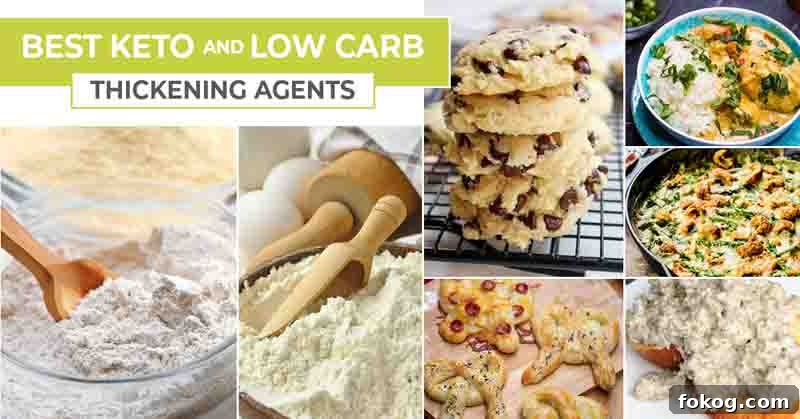
In summary, konjac flour is the go-to for hot sauces and reheated dishes; guar gum and xanthan gum are useful stabilizers—guar for cold applications and xanthan for baked goods—and gelatin is best for cold-set desserts. Cream cheese adds richness and body but is not a primary thickener. Choosing the right agent for the job will improve texture and keep your keto recipes enjoyable.
New to Keto? Check out the Keto Starter Guide!

The Keto Starter Guide is a helpful resource for beginning your low carb journey. It typically covers essentials such as macros and tracking, recipe selection, how to enter ketosis, suitable fruits for keto, and strategies to manage common transition symptoms. A beginner-focused guide can make starting keto more manageable by breaking the process into clear steps.
- What are macros and why track them?
- How to find the best keto recipes
- What is ketosis and how to reach it
- Which fruits fit a ketogenic diet
- How to handle transition symptoms often called “keto flu”
The next time you need a keto-friendly thickener, consider konjac flour for hot dishes, guar or xanthan gum for specific cold or baked applications, gelatin for chilled gels, and cream cheese for added creaminess. Which thickener is your favorite to use?
More Low Carb/Keto Diet Tips and Tricks
- The Ultimate Keto Guide of Products (includes must-have items)
- Beginner low carb tips for success
- Benefits of a low carb diet
- Top diet tips for a low carb plan
- How to start keto the easy way
- Low carb vegetarian diet tips and tricks
- Low carb diabetic diet tips for success