Table of Contents
Sous vide is a widely used cooking method you’ll encounter in cooking shows, forums, and social media communities. While it may seem trendy today, sous vide has roots in professional kitchens dating back to the 1970s, when chefs began using vacuum sealing and precise temperature control to deliver consistently cooked dishes.
Today, sous vide — literally “under vacuum” — is popular both in restaurants and at home. Affordable immersion circulators and sous vide machines let home cooks achieve restaurant-quality results with minimal fuss. However, there are important techniques and safety practices to understand: vacuum sealing matters, cooking time and temperature are critical, and sous vide is not simply “boiling food in a bag.”
A common question for newcomers is whether it’s safe to leave a sous vide cooker unattended, especially overnight. Below you’ll find practical guidance on leaving a sous vide machine running, how long you can safely cook, which foods are suitable for long cooking, and other safety considerations.
What is Sous Vide Really?
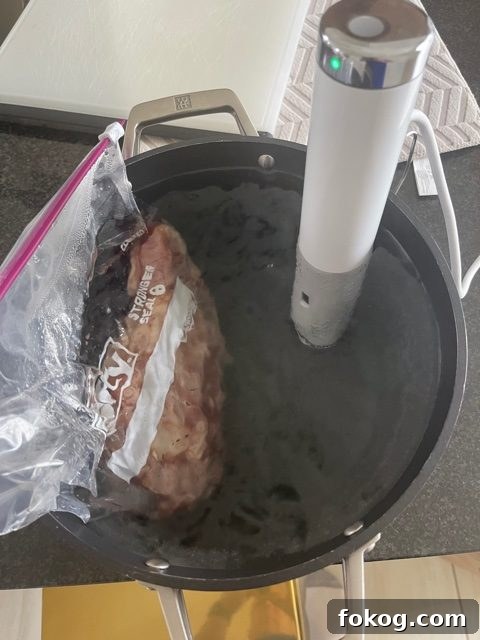
Sous vide involves vacuum-sealing food in a bag and cooking it in a precisely controlled water bath. The vacuum seal helps flavors infuse and keeps the food in direct contact with the temperature-controlled water, which ensures even cooking. Unlike simply boiling food in a bag, true sous vide uses accurate temperature control and proper sealing to deliver predictable texture and safety.
The technique developed from industrial and professional practices; today consumer devices bring that level of control to home kitchens. Proper sealing and temperature management are essential for both quality and safety.
How Long Can You Leave Sous Vide On For?
Safe sous vide cooking depends on time, temperature, and vacuum sealing. Many dishes are safely cooked for extended periods — 24 to 48 hours is common for certain cuts — provided the internal water temperature stays within a safe range, typically at least 54 to 66°C (130 to 150°F) depending on the recipe and desired doneness. After a long cook, serve immediately or cool and freeze; avoid repeated reheating and refreezing for food-safety reasons.
Can You Leave Sous Vide Overnight?
Yes, you can leave a sous vide cooker running overnight, depending on the food and settings. Tough cuts that benefit from long, low-temperature cooking—such as brisket or short ribs—often improve with extended cooks. More delicate items, like fish or soft vegetables, can become too soft if left too long. For overnight cooks, choose a lower temperature appropriate for the ingredient and follow trusted recipes or prior experience to avoid over-softening.
Can You Leave a Sous Vide Cooker on All Day?
Leaving a sous vide cooker running all day is fine for dishes designed for long, slow cooking, such as stews, ragu, or braised meats. These foods often become more tender and flavorful with extended time. Conversely, delicate ingredients can break down if cooked too long. Always match time and temperature to the food’s texture and structure to get the desired result.
Is a Sous Vide Cooker Safe to Leave Alone?
Modern sous vide devices are designed for unattended operation in much the same way as slow cookers. It’s generally safe to leave them running for several hours, provided you place the device on a stable surface away from children, pets, and moisture hazards. Ensure the device is in good working order and follow manufacturer safety guidelines. Some models offer timers or remote control features so you can schedule start and stop times for convenience.
What Foods Will Overcook Overnight in a Sous Vide?
Hearty, solid foods—tough cuts of meat, root vegetables, and stews—tolerate long sous vide cooks and often improve with time. Delicate foods like fish, shellfish, tender vegetables, or soft fruit can overcook, becoming mushy or losing texture if left too long. With experience, cooks learn how long different ingredients hold their texture at a given temperature; when in doubt, reduce the time or lower the temperature for fragile items.
Ribs and similar cuts are a good example of ingredients that benefit from long sous vide treatments: they become tender without losing their structure when cooked at the correct low temperature for many hours.
Can a Sous Vide Cooker Overheat?
When functioning properly, a sous vide circulator should not overheat because it maintains a stable water temperature and includes built-in safety features. If a device does overheat or behaves abnormally, stop using it and have it inspected or replaced. Malfunctions are uncommon but should be treated seriously to avoid electrical hazards.
Can You Time a Sous Vide Cooker?
Many sous vide machines include a timer function that lets you set the cooking duration. Different models offer varying controls—some have onboard timers while others connect to apps for scheduling. Consult your machine’s manual to learn how to set and adjust cooking time. Using the timer makes it easier to plan long cooks and ensure food is ready when you need it.
Can You Freeze Sous Vide Food?
Yes, sous vide-cooked food can be frozen after cooking, but it is best practice to freeze only once. Thawing and refreezing or repeatedly reheating and cooling can compromise safety and quality. After thawing, reheat to a safe temperature before serving, and avoid cycling foods through multiple freeze–thaw–reheat cycles.