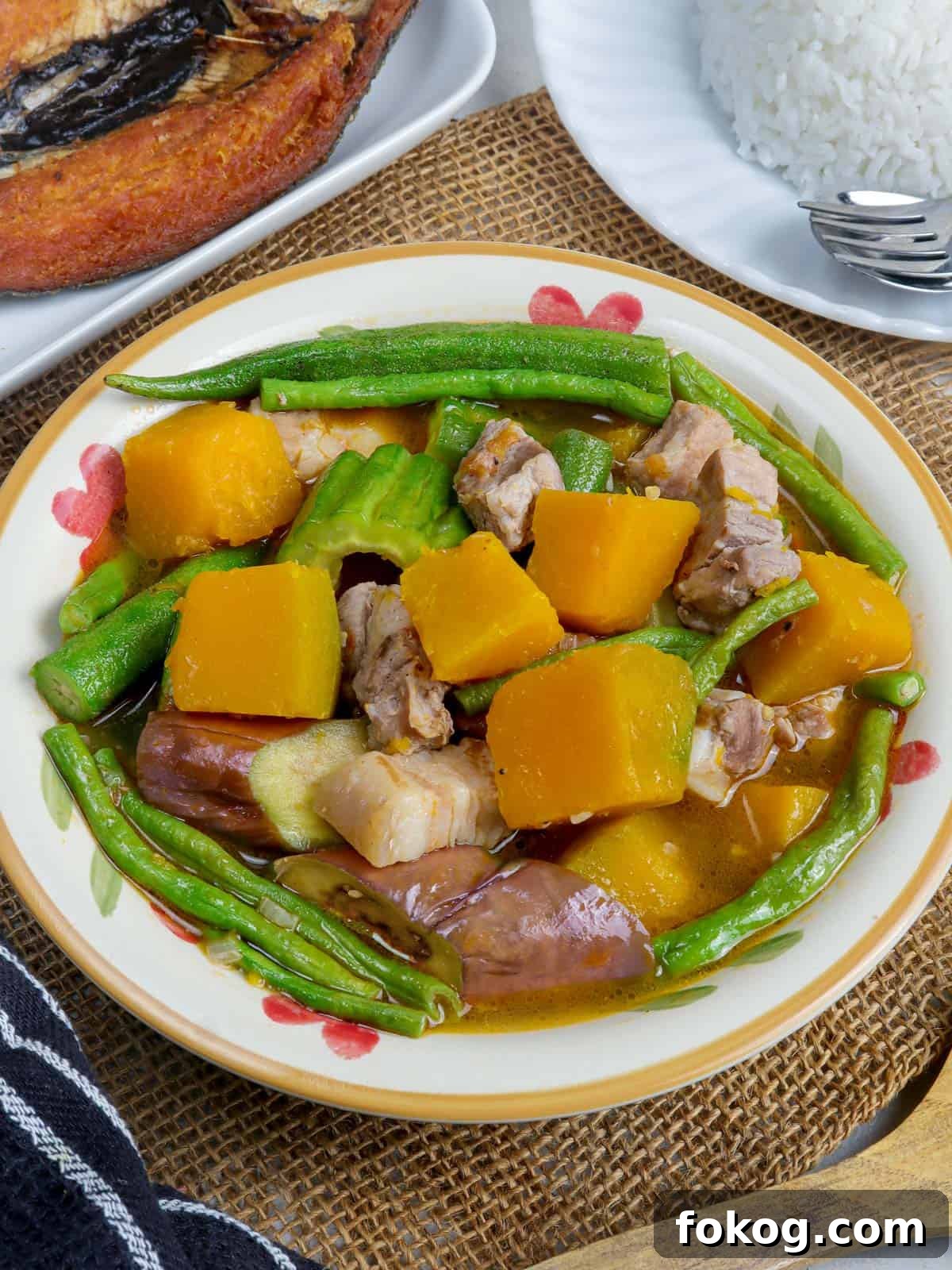
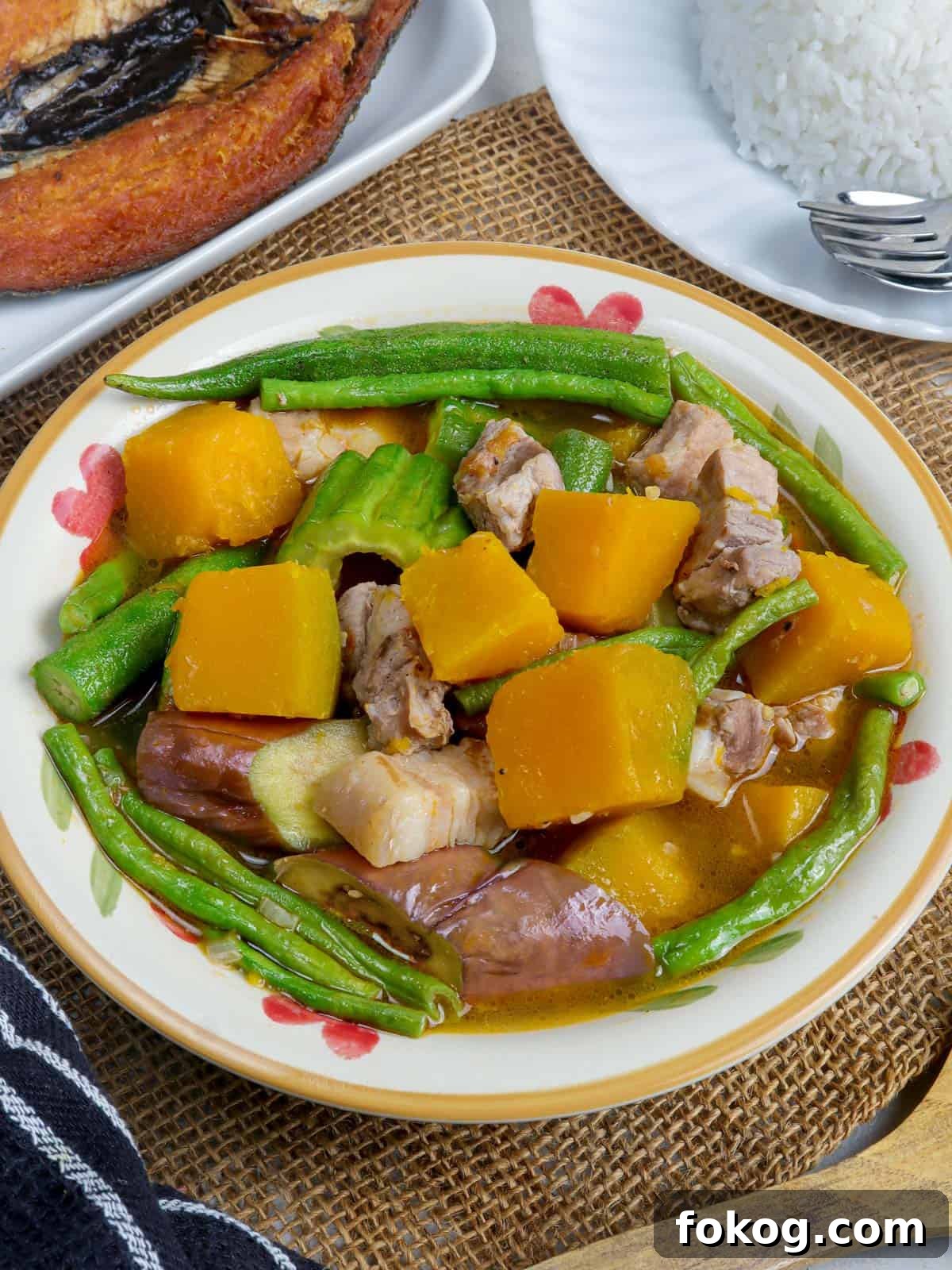
Pinakbet Tagalog is as nutritious as it is flavorful. This vibrant Filipino stew combines local vegetables, pork belly, and shrimp paste for a comforting main dish or a savory side alongside fried fish or grilled meats.
Some of my warmest childhood memories are weekends when my brothers and I gathered around the table to eat our mother’s pinakbet. Like many kids, we sometimes preferred spaghetti or chicken barbecue, but the hearty vegetable stew always felt special—partly because it was made by her and partly because sharing a home-cooked meal made ordinary days memorable.
What is Pinakbet
Pinakbet, also spelled pakbet, is a traditional Filipino vegetable stew that originated in the Ilocos region. Its name comes from the Ilocano word pinakebbet, meaning “shriveled,” which describes how the vegetables are gently cooked until they collapse and develop concentrated flavors.
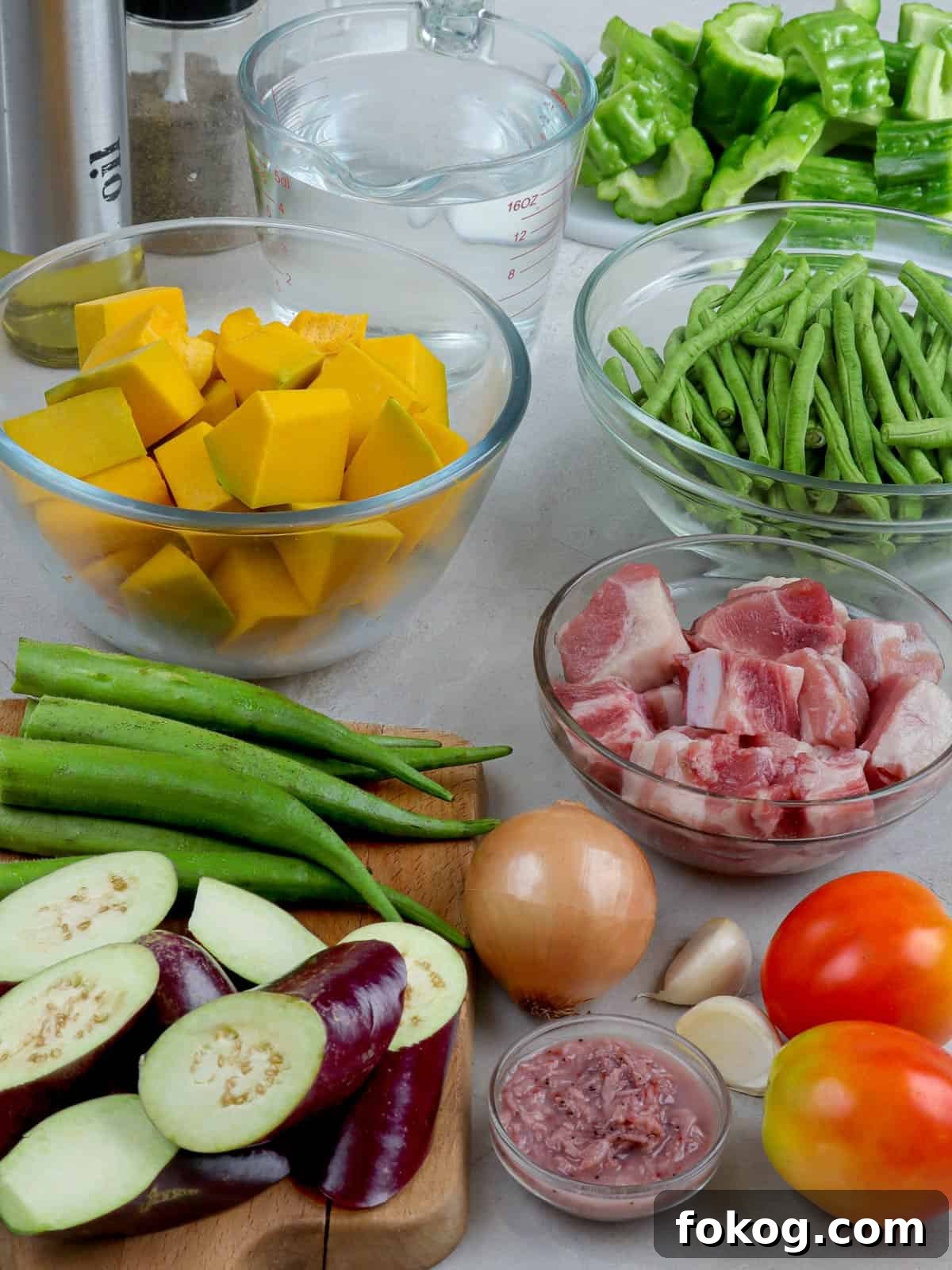
Classic pinakbet highlights locally available produce—eggplant, okra, bitter melon (ampalaya), long beans (sitaw), tomatoes, and squash (kalabasa)—often paired with pork or salted fish. The signature seasoning is bagoong, a fermented seafood paste. Northern Ilocos versions typically use bagoong monamon (fermented fish), while the Tagalog or southern-style pinakbet commonly uses bagoong alamang (shrimp paste) and often includes kalabasa for sweetness. Proteins such as diced pork belly, fried bagnet, or shrimp are added to deepen the flavor.
Cooking tips
- Cut ingredients to uniform sizes so everything cooks evenly—slice long beans to the same length and cut pork belly into similarly sized pieces.
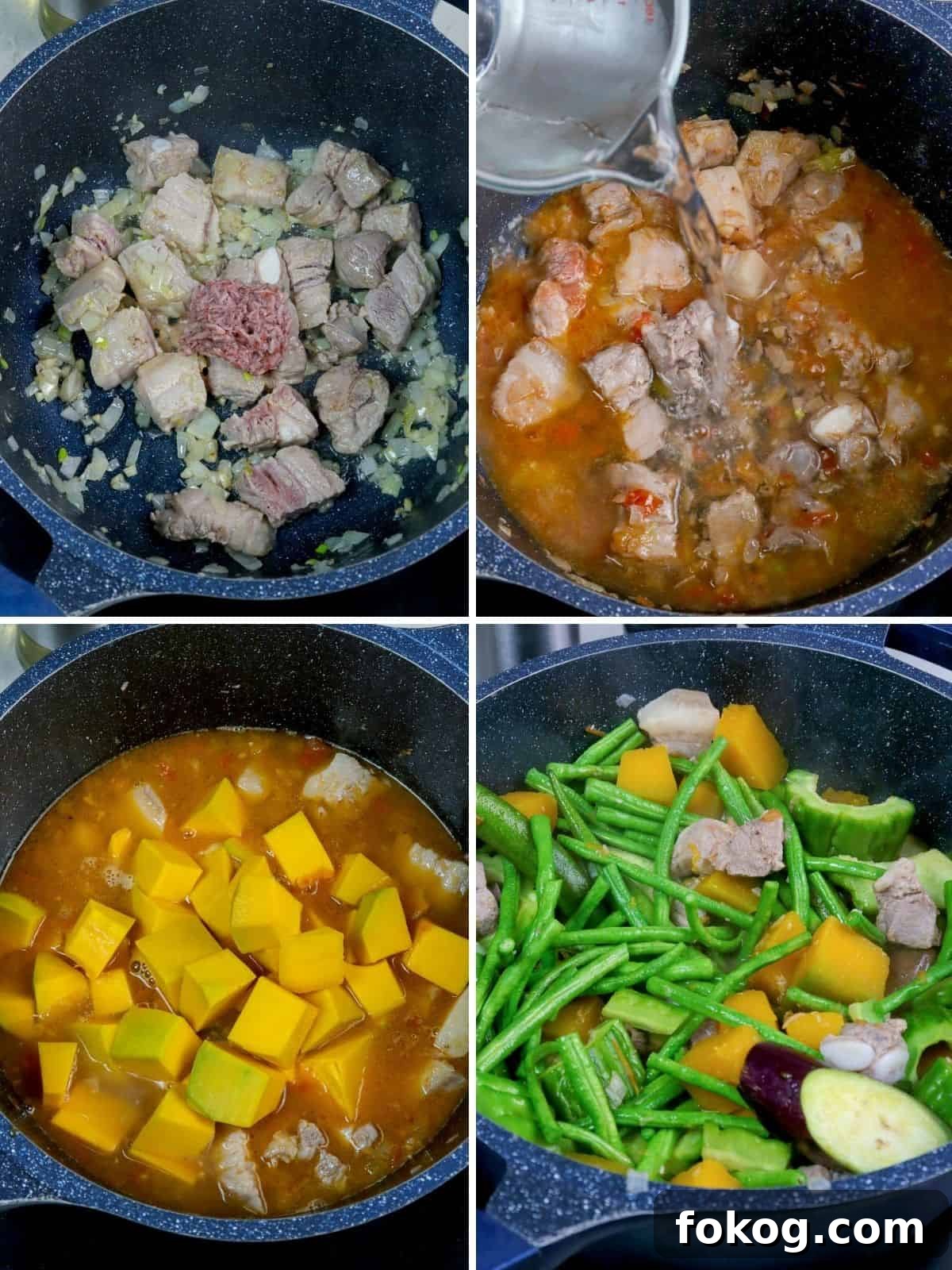
- Add vegetables in order of cooking time: sturdier items like kalabasa and sitaw go in first, followed by eggplant, ampalaya, and okra, which soften more quickly.
- Pork belly offers a good balance of meat and fat for texture and flavor. Alternatives include pork shoulder, bagnet, lechon kawali, shrimp, or pre-cooked fish.
- To reduce an overly strong “fishy” aroma from shrimp paste, cook it for a few minutes until it starts to brown and its flavor mellows.
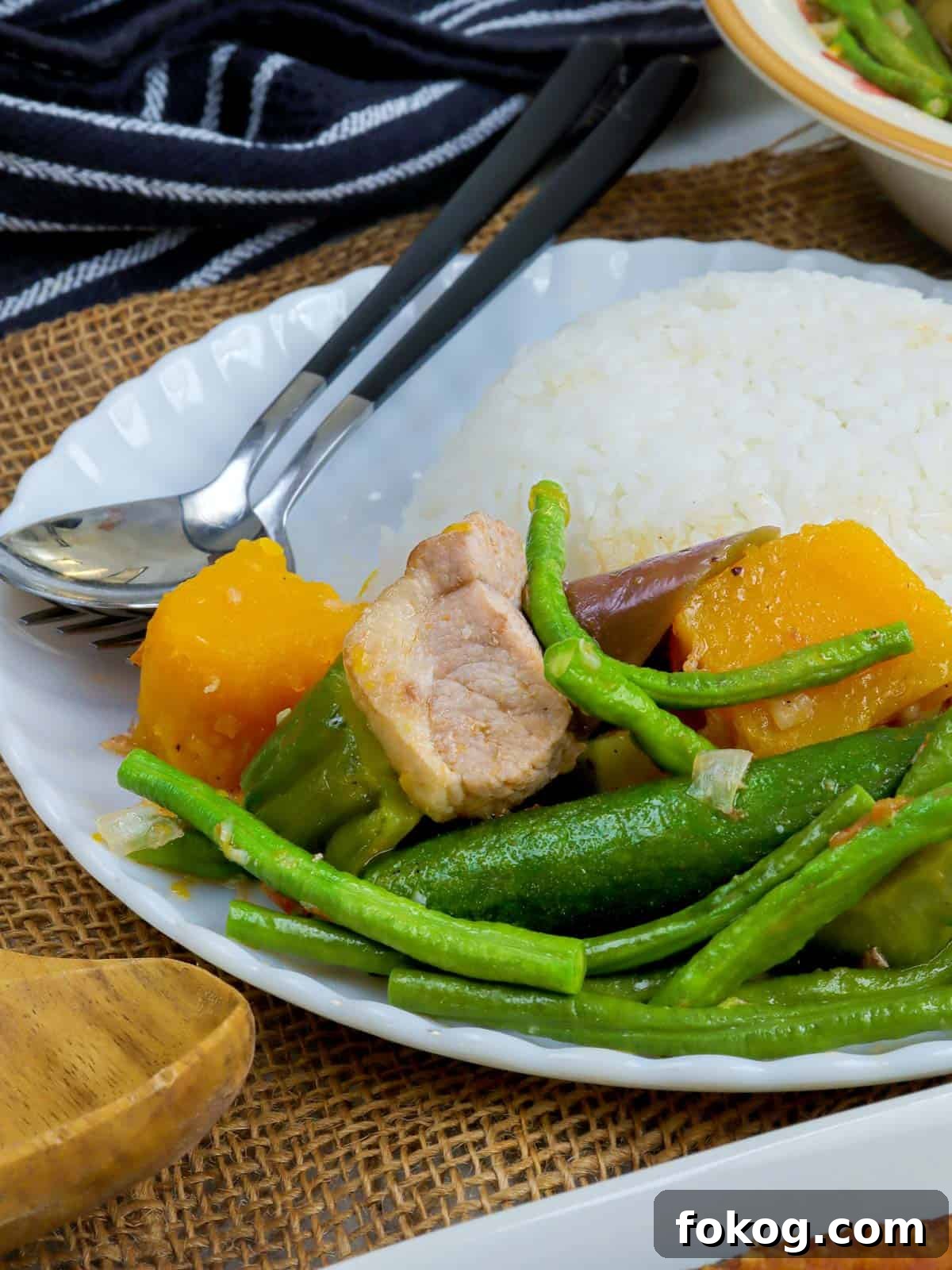
How to serve and store
- This hearty mix of vegetables and meat is filling enough to be a complete meal when served with steamed rice, but pinakbet also makes an excellent side to fried fish or grilled meats.
- To store, let the pinakbet cool completely, then transfer to an airtight container and refrigerate for up to three days.
- To reheat, warm gently in a wide pan over medium heat until heated through. Add a splash of water if the sauce has thickened.
For more vegetable-focused dishes, try ginisang gulay for a simple, budget-friendly side that’s equally satisfying.
More vegetable recipes
Ginisang Upo at Hipon
Kangkong and Tofu with Oyster Sauce
Eggplant with Spicy Garlic Sauce
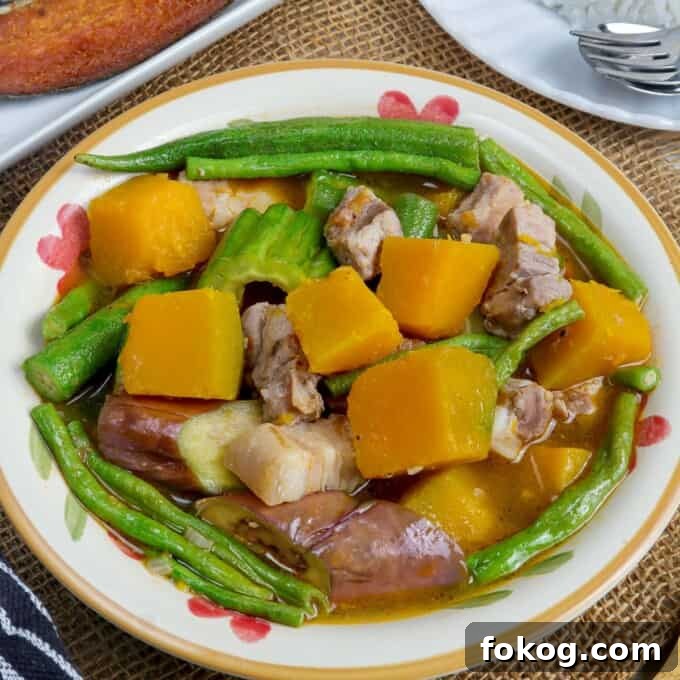
Pinakbet
Ingredients
- 1 tablespoon canola oil
- 1 onion, peeled and chopped
- 2 cloves garlic, peeled and minced
- ½ pound pork belly, cut into 1-inch cubes
- 1 tablespoon shrimp paste
- 2 Roma tomatoes, chopped
- 2 cups water
- ½ small kalabasa (squash), peeled and cut into pieces
- 8 okra, ends trimmed
- ½ bunch long beans, ends trimmed and cut into 3-inch lengths
- 1 medium ampalaya (bitter melon), seeded, halved and cut into 1-inch thick pieces
- 1 large eggplant, ends trimmed and cut into 1-inch pieces
- Salt and pepper to taste
Instructions
- Heat oil in a pot over medium heat. Add onions and garlic and cook, stirring, until softened.
- Add the pork and cook, stirring occasionally, until lightly browned.
- Stir in the shrimp paste and cook until it begins to brown.
- Add tomatoes and mash them with the back of a spoon until they release their juices and soften.
- Pour in water and bring to a boil. Reduce heat, cover, and simmer for 15–20 minutes or until the pork is tender. Add more water in ½-cup increments as needed to keep about 1 cup of liquid in the pot.
- Add the squash and cook about 2 minutes or until almost tender.
- Add the long beans and continue cooking until they are tender-crisp.
- Add ampalaya, eggplant, and okra. Cook 4–5 minutes more, until vegetables are tender but still retain some bite.
- Season with salt and pepper to taste. Serve hot with steamed rice.
Notes
- For even cooking, keep vegetable pieces and pork cut to similar sizes.
- Add vegetables in stages based on cooking time: sturdier items first, then quicker-cooking ones to avoid overcooking.
Video
Nutrition Information
Carbohydrates: 23.32 g,
Protein: 11.71 g,
Fat: 34.24 g,
Saturated Fat: 11.32 g,
Cholesterol: 83.57 mg,
Sodium: 168.94 mg,
Potassium: 1015.05 mg,
Fiber: 7.38 g,
Sugar: 8.87 g,
Vitamin A: 2103.79 IU,
Vitamin C: 48.16 mg,
Calcium: 99.63 mg,
Iron: 1.87 mg