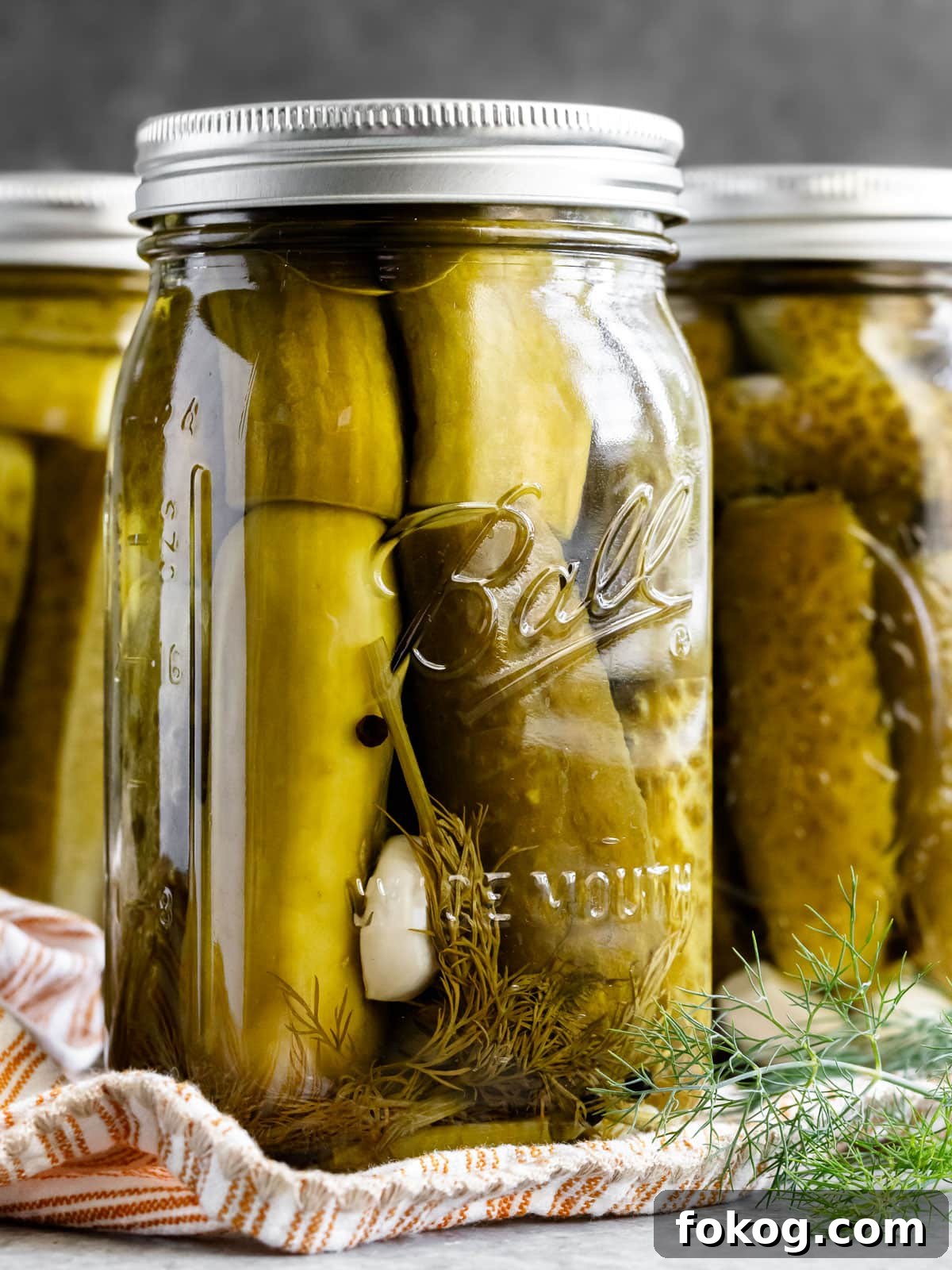
These easy homemade dill pickles are crisp, tangy and refreshingly simple to make. Seasoned with garlic and plenty of fresh dill, they’re perfect with hot dogs, burgers or as a snack. Properly canned and stored in a cool pantry, they can last up to a year. For a sweeter alternative, consider a sweet-and-spicy version.
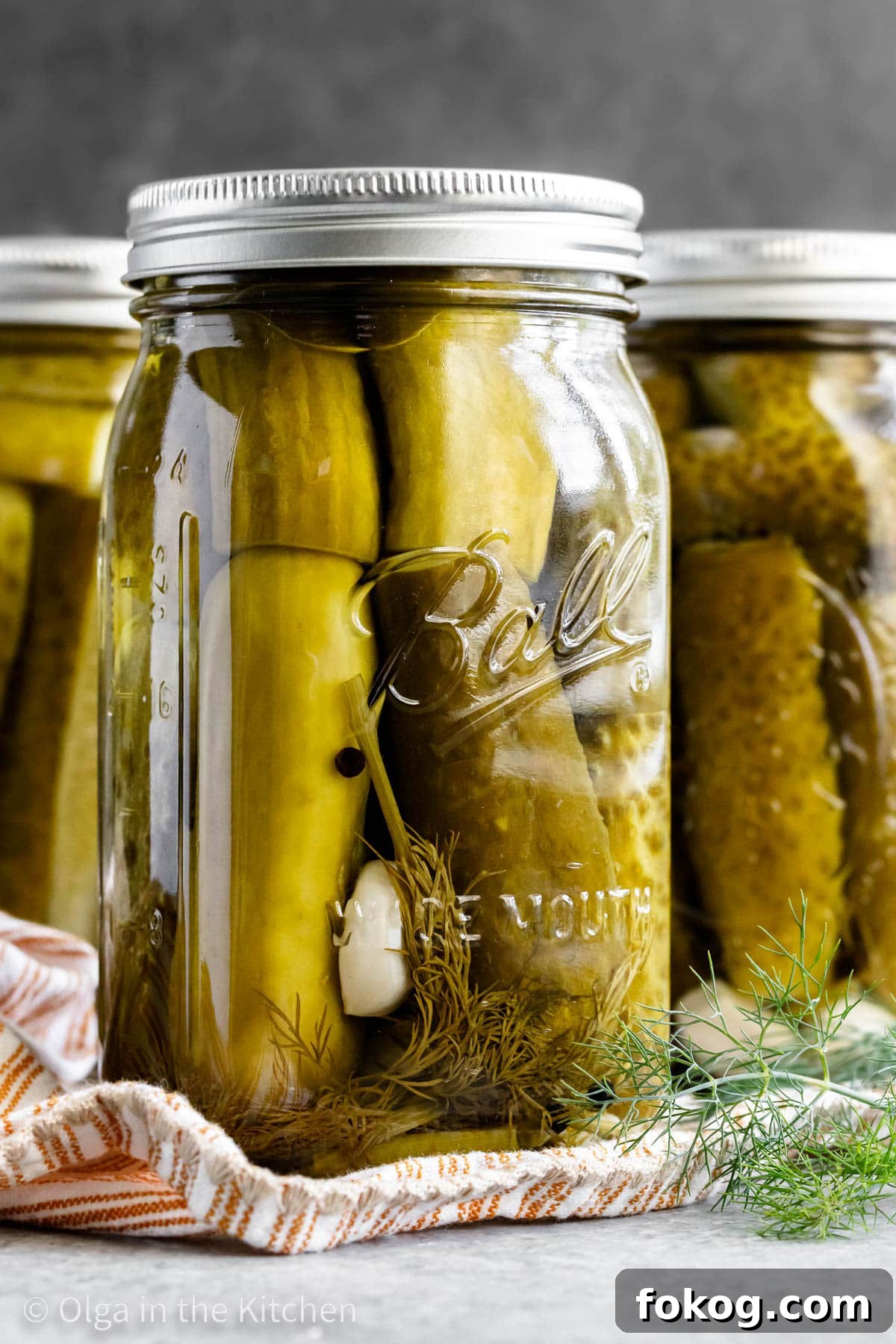
Dill Pickles Recipe
This is a shelf-stable dill pickle recipe designed for home canning. Once sealed and stored in a cool, dark place, jars can keep up to a year. The recipe came from a family member and produces crunchy, flavorful pickles reminiscent of store-bought dill wholes—but better when fresh from your pantry.
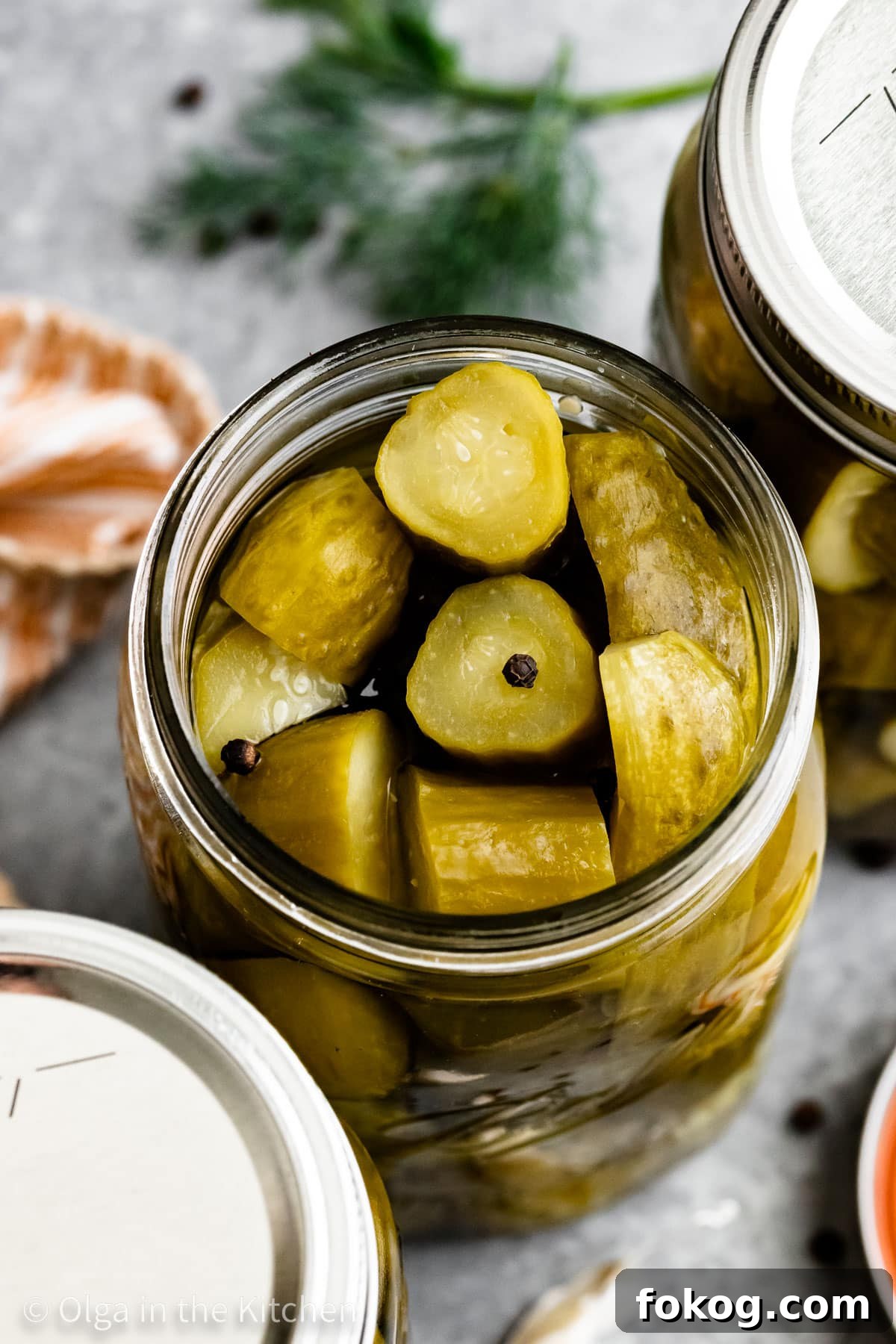
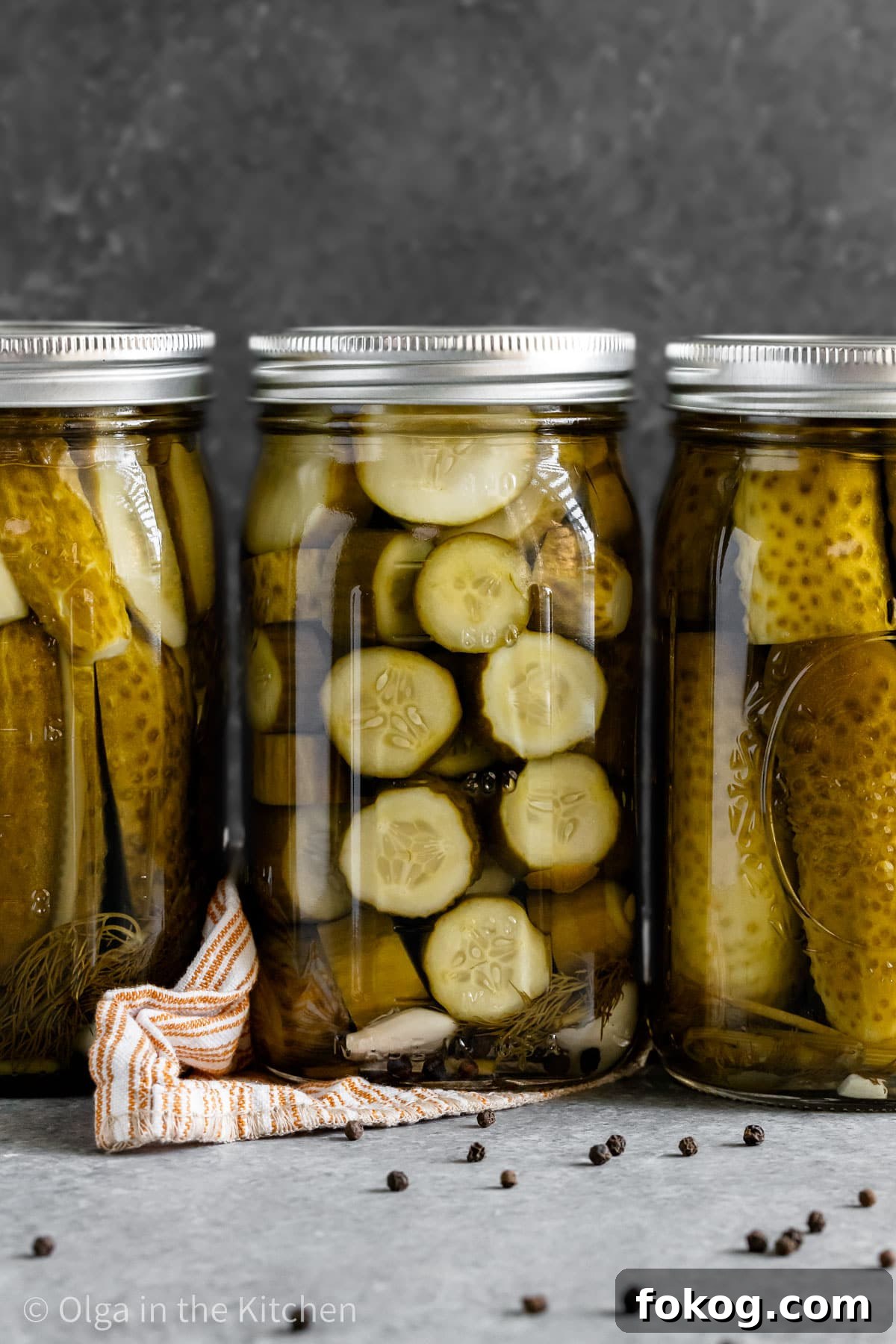
These tangy pickles are versatile: use whole pickles, spears or chips in salads, sandwiches or as a snack. They save a trip to the store when you need that bright dill flavor for a recipe or an appetizer.
Why You’ll Love These Pickles
- Balanced flavor: A bright combination of vinegar, salt, a touch of sugar, fresh dill and garlic creates classic dill pickle flavor—salty, tangy and satisfying.
- Crunchy texture: When packed and processed correctly, these pickles stay crisp. Whole cucumbers, spears or chips all work well; larger cuts often retain their crunch longer.
- Beginner-friendly canning: The method is straightforward and explained step-by-step below, so even newcomers to home canning can feel confident.
- Reasonable time investment: Packing jars takes some time, but the full process for one batch typically finishes within about two hours. Whole cucumbers are quickest to jar; chips or spears take a bit longer to pack tightly.
Ingredients
- Cucumbers: Small pickling cucumbers (4–5 inches) are great for whole pickles; larger cucumbers can be cut into chips or spears.
- Water: For the brine and for the water bath when processing jars.
- Distilled white vinegar: Use 5%–6% acidity for reliable, bright pickles.
- Granulated sugar: A small amount balances vinegar and salt without making the pickles noticeably sweet.
- Fine salt: Regular fine salt or pickling salt both work; measure carefully.
- Fresh dill: Dill heads (umbrellas) are ideal; fresh herb sprigs also work—place them at the bottom of each jar.
- Fresh garlic: Two large cloves per 32-oz jar add savory depth.
- Black peppercorns: Whole peppercorns provide gentle spice without clouding the brine.
- Bay leaves: Add rounded savory notes to the brine; discard during cooling if desired.
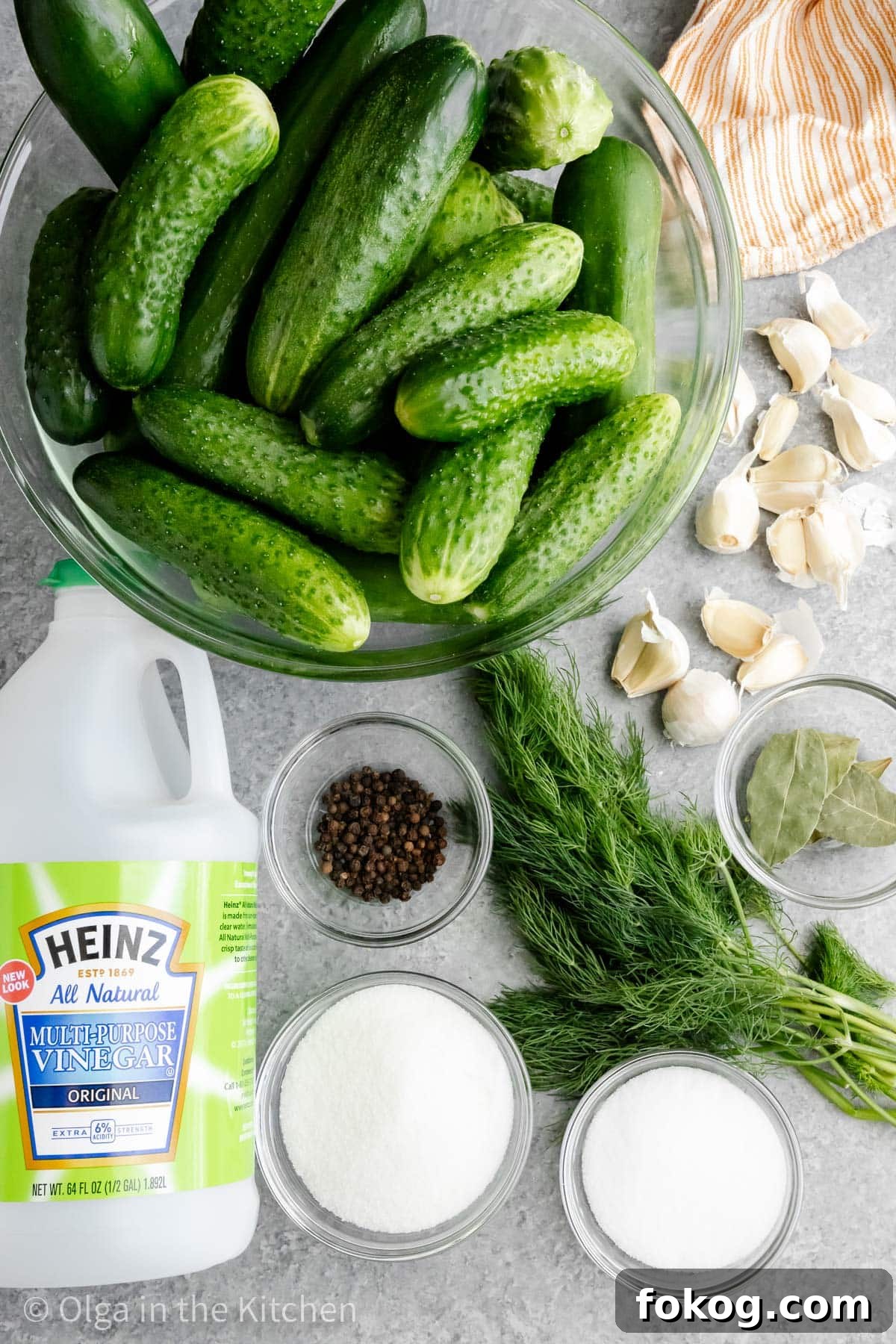
Home Canning Tools Needed
- 32-oz wide-mouth mason jars with new lids and rings
- Large stockpot (20 qt or larger) for water-bath processing
- Towel or rack to protect jar bottoms during processing
- Jar lifter for safely removing hot jars
Best Cucumbers to Use
Many types of cucumbers work for pickling. Smaller pickling cucumbers are convenient, but any fresh cucumber cut to your preferred size will yield tasty pickles. If you plan to store pickles for many months, whole cucumbers or spears tend to keep their texture best.
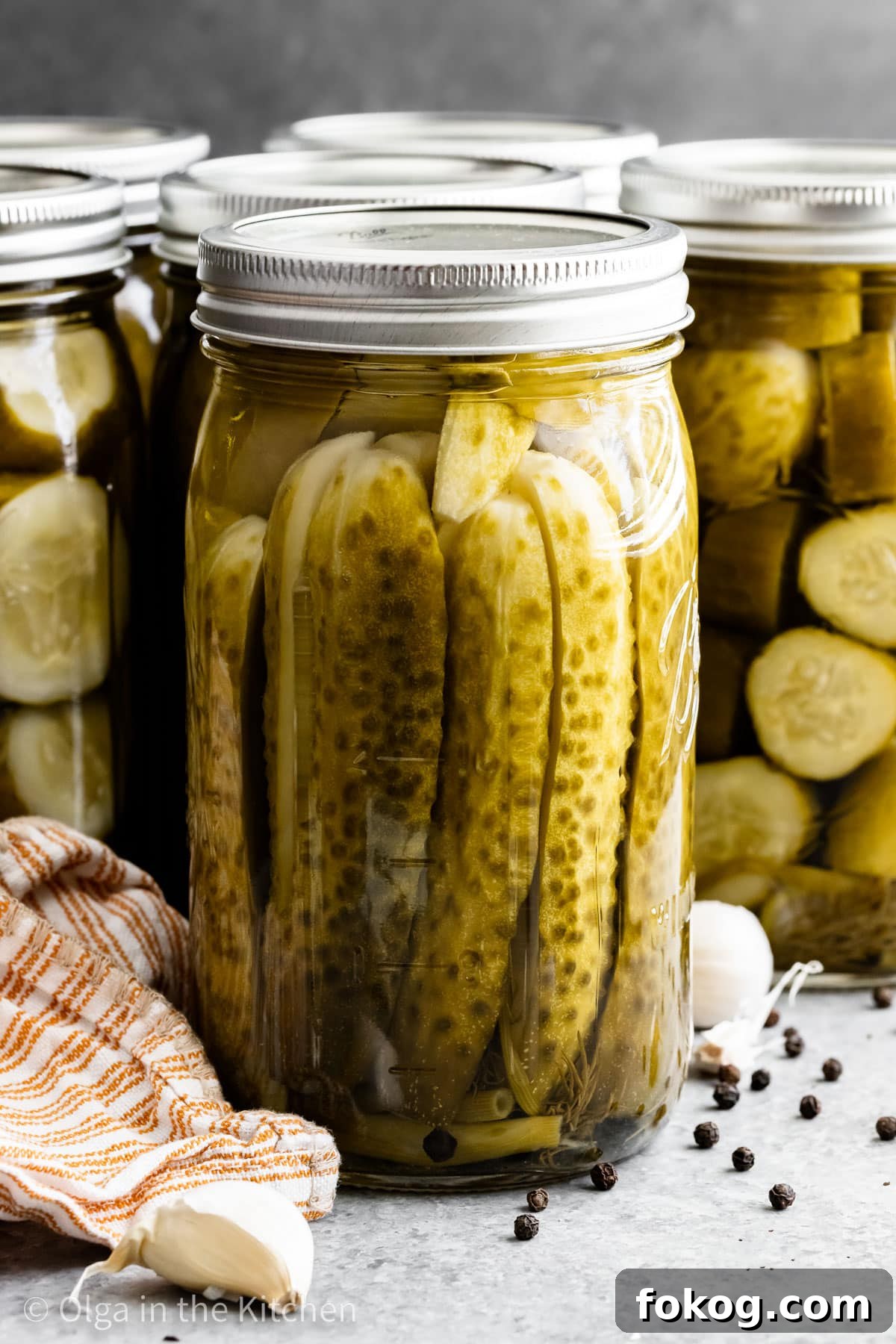
Overview: How to Make Dill Pickles
- Sterilize jars: Wash jars and lids with warm soapy water. Submerge lids in boiling water for 4–5 minutes, then pat dry. Preheat the oven to 215°F and place jars upside down on racks to dry for about 20 minutes or until fully dry.
- Make the brine: In a large pot combine water, distilled vinegar, sugar, salt and bay leaves. Bring to a boil, stir until sugar and salt dissolve, then remove from heat and let rest briefly. Discard bay leaves if desired.
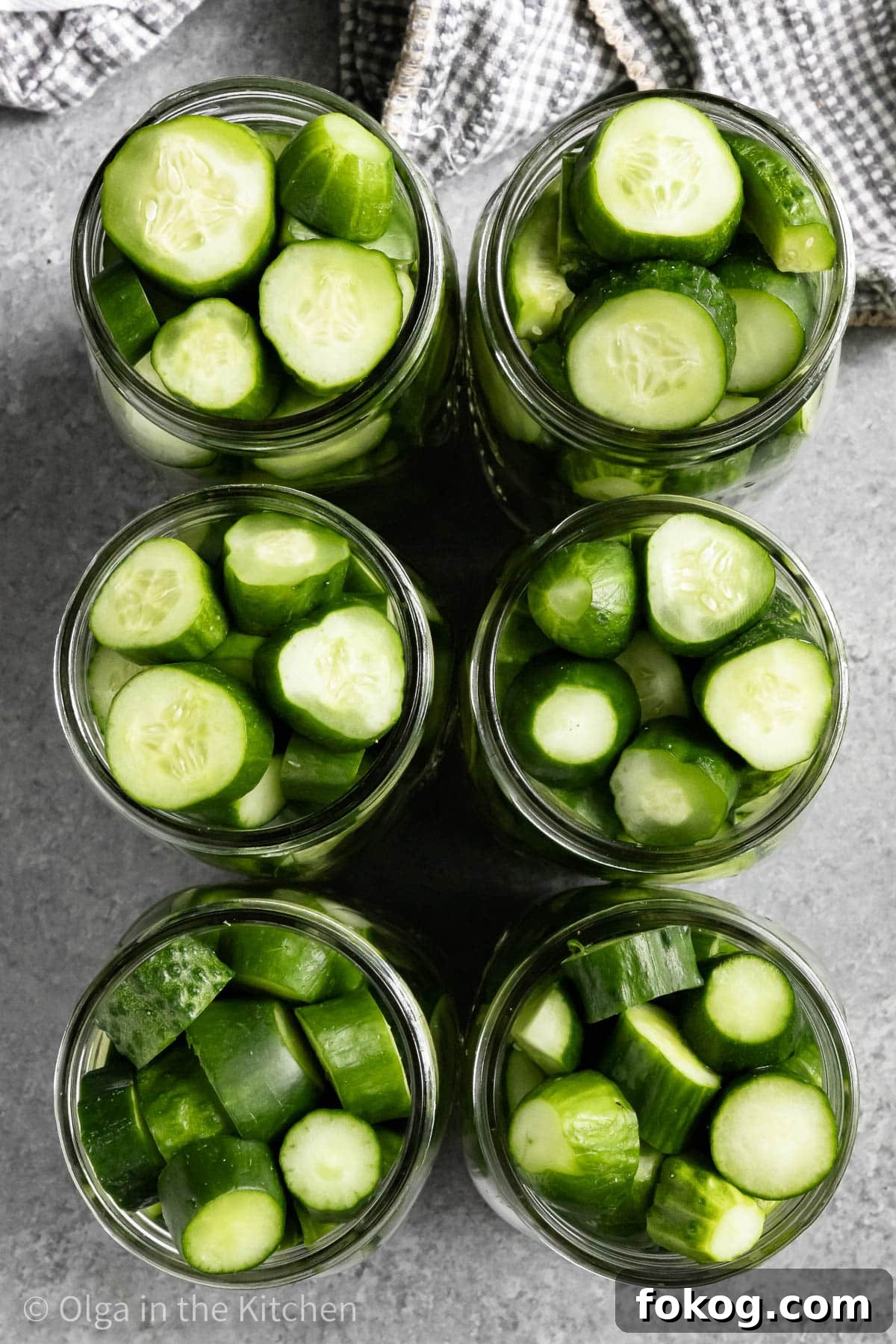
- Fill jars: Trim both ends off each cucumber. Place fresh dill, garlic cloves and peppercorns in the bottom of each jar, then tightly pack cucumbers (wholes, spears or chips). Pour hot brine over cucumbers, leaving 1/2 inch headspace. Cover jars loosely with lids (do not tighten fully yet).
- Process jars: Place jars in the prepared pot on a towel or rack so jar bottoms don’t touch the pot. Fill with warm water to about 2 inches below jar tops, cover, bring to a boil, then reduce heat and simmer for about 15 minutes or until cucumbers turn a lighter green.
- Seal jars: Remove jars with a jar lifter, tighten lids, then invert jars and cover with towels or blankets. Let them rest undisturbed at room temperature for 12–24 hours. Listen for the sealing “pop.” Once sealed and cooled, store jars in a cool, dark place.
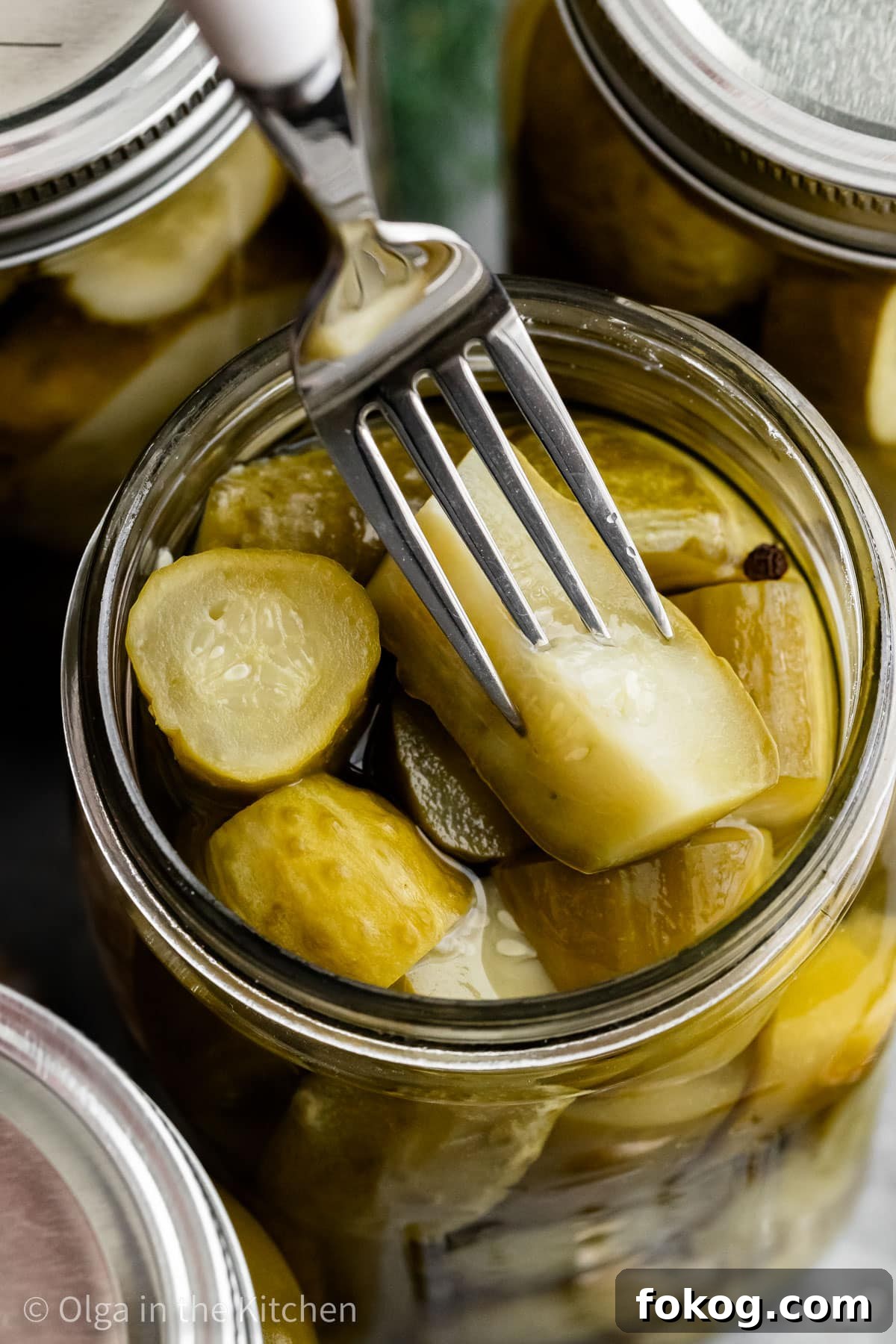
Signs of Spoiled Canned Pickles
Always err on the side of caution with home-canned foods. Discard any jar that shows:
- Leaking, bulging or cracked jars
- Foaming or spurting liquid when opened
- Unpleasant, off or moldy smells
- Discoloration or slimy texture
More Garden Vegetable Salads You’ll Love
- Pickled Salad Autumn
- Green Cabbage Cucumber Salad
- Quick Tomato Salad
- Creamy Broccoli Cauliflower Salad
- All-Veggie Salad
- Lettuce Radish Salad with Lemon Dressing

Easy Homemade Dill Pickles
- Comments
- Pin
Ingredients
- 12 pounds cucumbers* (approximately), well rinsed with ends trimmed
- 1/2 tablespoon peppercorns, (about 5 per jar)
- 16 garlic cloves (2 per jar)
- fresh dill, 2–3 twigs per jar
Pickling Brine
- 12 cups (3,000 ml) water (cold or lukewarm)
- 2 cups (500 ml) distilled white vinegar, (5%–6% acidity)
- 2/3 cup (200 g) fine salt
- 1/2 cup + 1 tablespoon (115 g) granulated sugar
- 5 bay leaves
Instructions
-
Sterilize jars: Wash jars and lids. Submerge lids in boiling water for 4–5 minutes and pat dry. Preheat oven to 215°F and place jars upside down on racks; dry for about 20 minutes.
-
Make pickling brine: In a large pot combine 12 cups water, 2 cups vinegar, 1/2 cup sugar, 2/3 cup salt and 5 bay leaves. Bring to a boil, reduce heat and simmer 5 minutes, ensuring sugar and salt dissolve. Remove from heat, let rest 10 minutes and discard bay leaves if desired.
-
Fill jars: Trim both ends from cucumbers. Place dill, garlic and peppercorns in each jar, pack cucumbers tightly, then pour brine in leaving 1/2 inch headspace. Cover jars loosely with lids (do not tighten fully).
-
Process jars: Line the bottom of the processing pot with a towel or use a rack so jars don’t touch the pot. Place jars in the pot and add warm water to about 2 inches below jar tops. Cover, bring to a boil, then simmer and process jars for about 15 minutes or until cucumbers turn slightly lighter green.
-
Seal jars: Remove jars with a jar lifter, tighten lids, invert jars and cover with towels or blankets. Let rest undisturbed at room temperature 12–24 hours. Once cooled and sealed, store jars in a cool place.
Notes
- Cucumbers: The number of jars you get depends on how you cut and pack cucumbers. Tightly packed jars use less brine but still pickle well.
- Metric measurements: Water about 2,880 ml and vinegar about 480 ml; ingredients are rounded in the list for easier measuring.
- Seal test: Press the center of the cooled lid—if it does not pop up and down the jar is sealed. If the lid flexes or you hear a clicking sound, refrigerate and use those pickles soon.
- Brine ahead: Brine can be made a day ahead and refrigerated; bring it to room temperature before pouring over cucumbers.
- Trim ends: Cutting off both cucumber ends is important because the ends contain enzymes that can soften pickles.
- Avoid over-processing: Extended time in the water bath will soften cucumbers; remove and allow jars to finish sealing under towels.
- Storage: Properly canned pickles stored in a cool place can last up to one year. After opening, refrigerate and use within about a month.